From my Mission Statement 2.0:
To have every story be an improvement in craft.
Pro: Hey, look! I’m improving my craft!
Con: Wow. My writing really stunk before.
How do you improve your writing? I was asked this question at a book club meeting. They specifically wanted to know if I took classes or got a degree in English or writing. My cheeky answer was that I had spent enough time in classrooms (getting my Ph.D.) that I had been excused for the rest of my life. What I really meant was that I fashioned my own craft-development program. It includes:
- Writing, writing, writing
- Seeking (and giving*) critiques from/to a range of writers, especially ones more talented than I am
- Studying writers that I admire, especially ones that write best-selling books
- Reading books about writing, but only when I can actively apply them to a draft I am working on (see this post about my latest read, Robert McKee’s Story)
- Visiting writer blogs for tips and new perspectives on craft
- Attending workshops and conferences when available and affordable
- Writing, writing, writing
*thanks to Laurel for reminding me
I’m constantly searching for ways to improve my craft, but I go through some periods of craft development that are more intense than others. Jody Hedlund impressed me when she hired an editor to help improve her craft – even though her book was already under contract! She had accomplished what many of us are striving for, and yet was unrelenting in her pursuit of craft improvement. I don’t believe a writer should ever stop looking for ways to improve – whether it’s the basics of grammar, or nuances of storytelling, or methods of description, or dashes of style – words are a writer’s tools, and we should always strive to be masters of them.
In the beginning, I assumed that at some point I would “master” fiction writing. In some senses, this is the wrong approach. One can master the equations of thermodynamics – they are objective and (for the last hundred fifty years or so) unchanging. Mastering something so inherently subjective as art (which writing and storytelling certainly are), seems like hubris. But a painter/writer friend of mine once said (I’m paraphrasing), Don’t mistake inexperience for style. She was referring to painters who don’t take the time to master the forms of painting, before developing their own method. They simply throw paint on the canvas and call it their style.
Simply because writing is art does not mean that one cannot strive for mastery. I can (and do) study people I consider to be masters. But, in the end, my style is my own. I will never write like Rowling or Westerfeld. They are wonderful writers, worthy of emulation, but I can only write like me. I can only mature in my own individual understanding of storytelling and craft. Whether it’s the Early Me or the Future Me, my writing will always be an incarnation of me-the-writer along my writing journey.
And that’s okay.
Perhaps my mission statement should include a caveat: be urgent in craft improvement, but gentle with the writer herself. She’s trying.
Note to Future Me: Don’t be embarrassed by my writing today – it’s the best I can do and a necessary foundational step to get where you are in Futureland. By the way, don’t think you’re all that anyway. I’m younger.
Do you see yourself evolving in your craft?
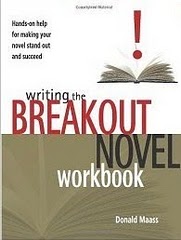
Most definitely. That's why I read a lot, and not just fiction. I read a lot of non-fiction books about writing. And today, I'm starting that wonderful workbook you've featured in the picture. 😉
Your approach reminds me of something Steven Pressfield says in _The War of Art_: the best artists approach their work territorily, treat it like it's their zone that they alone have access to and tending it is its own reward. Just like caretakers of a garden, we must keep developing in order to continue flourishing.
I'd add GIVING critiques to other writers of all levels helps develop craft too. I'm often blind to some of my weaknesses until I see a similar problem in another's work. I also find that in helping another resolve, say, plot problems, I find solutions to my own.
Great advice. It's so true we never stop learning and the fact that we can look back at our work and see the mistakes only shows how much we've grown.
@Stina I got that one for Christmas! I've only gotten through the first chapter, though. I'll be curious to hear what you think of it. 🙂
@Laura An EXCELLENT point about giving critiques – not only is it part of "being part of the writing community" but it's fantastic for craft (I'm revising above).
@moonlight Yes, I try not to cringe, but it doesn't always work. On the other hand, I can see bits of my voice in my prior work too.
This is a bit off subject, but have you heard of the new book, Taking Off by Jenny Moss? I thought you might be interested, Susan.
As far as improving MY writing, I really need to actually write instead of just thinking about it. I've got 2 picture book stories started… and just had another idea for a third one. I'm good at starting stories, bad at follow-through. 🙁
I am working hard toward craft improvement/mastery. I learned SO MUCH this past year and feel good about where I am. I'm not done working toward that goal, though. 🙂
Your pro and con cracked me up because I so relate. And I DO have a degree in English, and my most of my writing (that earned "A"s) from college makes me cringe. My college work was almost always a first draft, and revising makes such a difference. Put in the work, and your work improves.
I sure as hell hope my writing is still evolving! It would be depressing otherwise.
And I've done both the formal writing training and the informal, and both are equally valid. The key, I think, to either is the willingness to work and learn. Put in the hours reading and writing. But you have to be open to learning, to finding new paths anywhere and everywhere. Otherwise you've just built a wall, and your writing won't advance as quickly because new possibilities will simply bounce off.
And I think I'm going to have to try McKee's book, as I've simply heard too many good things about it from diverse sources. Of course, me reading a writing book is sort of like a recovering alcoholic falling off the wagon…
I certainly hope so. That's what I strive for.
@Megan A book about a girl who wants to be an astronaut and met the Challenger crew? No, that wouldn't interest me in the slightest (thank you – it is now on my TBR list!). 🙂 And the first step, the last step, and all the steps in between involve sitting down and writing! 🙂
@Shannon I think we have to pause and say "yes!" to our craft improvements – I alluded to that when I said I go through periods of craft development. After any growth or change, I think the mind needs a rest to assimilate the new knowledge. Good for your for pushing yourself!
@Myrna Ha! And a little bit sad. Revising is huge! Also difficult and a somewhat terrifying.
@Bryan open to learning Exactly! McKee does a masterful job of breaking down your walls and sucking you into his worldview. IMHO, that's what the best teachers do (also writers).
@Susan Good for you!
Yes, and it looks like my first comment could have used a revision as well. Le sigh.
I read one chapter of Donald Maass' "Fire in Fiction" a month. Try to absorb it and apply it before moving onto the next chapter. But it's probably giving and recieving critiques that moves me along the fastest in my growth, I think. I love what you said about studying the masters, too, but still having our own style.
@Myrna This is why we all need editors (for things that matter, not the blog comments!!).
@Margo Critiques are hugely helpful! I almost feel like critiques and writing books operate on two different levels – the writing books help with overall craft, from characterization to sentence structure. They give you the tools to do the job. Then the critiques come along and say "this part HERE; fix that," and you whip out your writerly tools and go to work. Both are key to making the MS sing. 🙂