The world is absolutely crazy right now, and yes, it’s Trump’s fault:

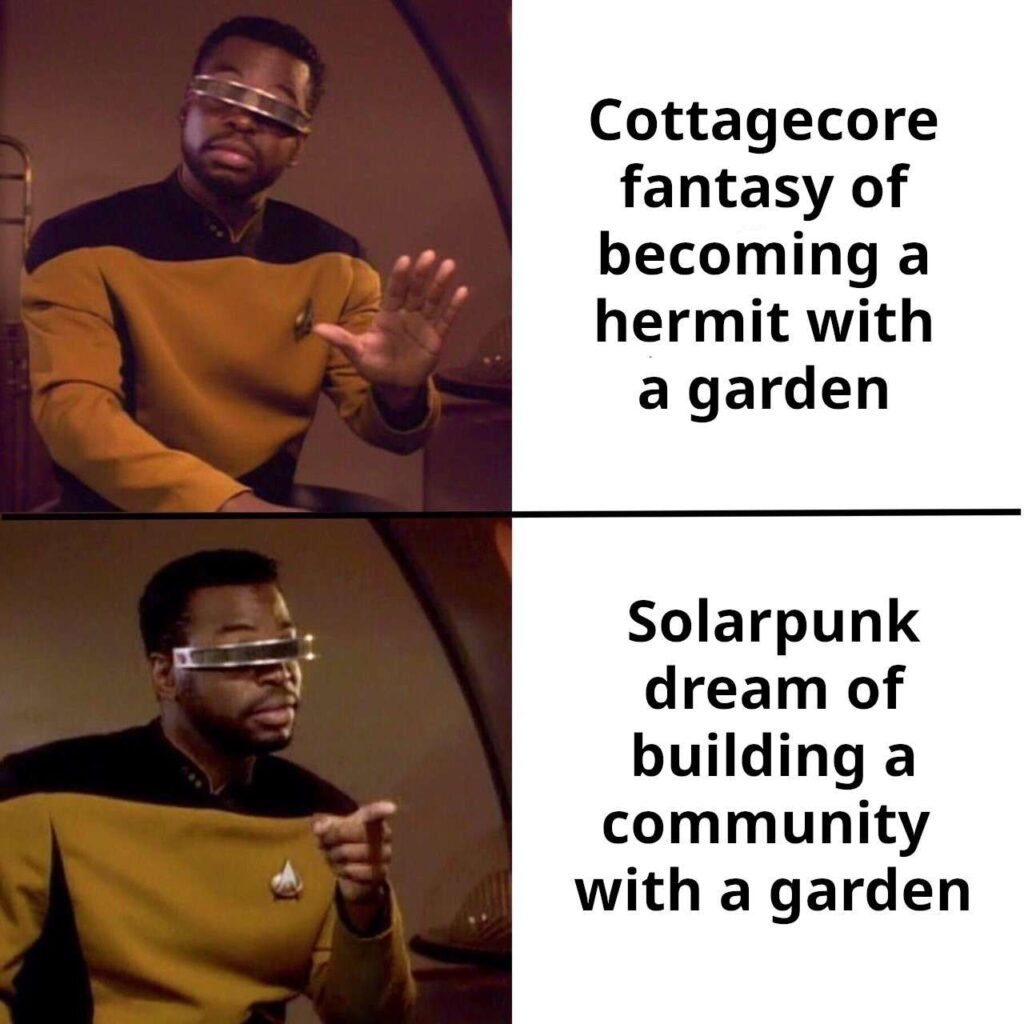
There’s a lot of very understandable free-floating stress (punctuated by moments of terror and glorious protests), but the response I’m seeing is often a reflexive turn toward rugged individualism—Quick! I need to learn how to grow my own food!—a pulling away from community rather than leaning into it.
Not only is that more of a panic response than a logical well-thought-out plan for food security, it’s also a missed opportunity to lay the foundations of a better world.
I can hear you thinking, “Sue, what the actual fuck? I can barely get through the day. I’m trying to survive, here — I don’t have spoons to do extra work to build a better world!”
And this is where you’re in luck! Because building a better world means better, not “extra work that doesn’t actually help me.”
So many endless narratives in our society are built around getting us to engage in “extra work” that only marginally helps you and actively destroys the community bonds and human infrastructure that could actually make your life better.
About That Garden
Go ahead and build a garden! But also: if you buy a farm share, especially from local organic regenerative farmers, you’re doing more than making sure you know your farmer by name (which could come in handy if there’s a real problem with food). You’re doing a bunch of different things at once to build a better world: keeping your money in the local economy, supporting someone who’s literally rebuilding the soil we all depend upon for life, anchoring a small business that literally feeds the community, and creating food resilience for you, your farmer, and your community. Corporate ag does not give a single solitary fuck about you—even if you ignore all the environmental harms they do, they have proven they will jack up prices in a crisis and keep them high, regardless of whether costs are actually higher.
My farmer, Art, hasn’t raised prices in three years—because he knows his customers by name and he wants to keep them. He might be forced to do so in the future, but you know what Art’s pretty much guaranteed never to do? Profiteer off the people buying his farm share.
SIDEBAR: FARM SHARE for those who don’t know what farm share is, it is not the same as a Farmer’s Market (although the same farmers may participate in both). Farm share is like buying a share of the harvest, usually ahead of time, basically “investing” in the farm for the season. It helps the farmer to know he’ll have a certain number of people buying his harvest. Whether the harvest is plentiful or slim, you get a portion. It helps stabilize their risk. Not every farm share practices organic, regenerative agriculture so look for that. A hidden benefit that you don’t realize until you start getting farm share produce is that it’s literally farm-to-table which means it tastes better and it lasts way longer — my farm share produce easily lasts twice as long as grocery store produce because it hasn’t been transported all over the country, burning carbon and aging along the way. All farm shares operate differently, some require prepay but not all, so check out the options you have: Find a CSA (Community Supported Agriculture)/ Farm Share near you
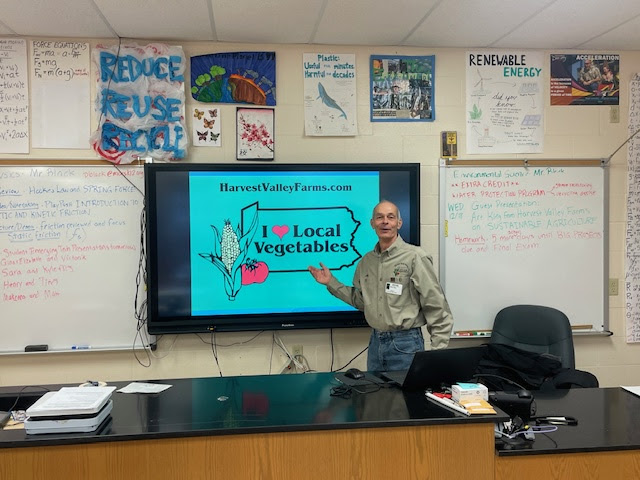
SIDEBAR: FOOD BANK I’ve been doing farm share for years precisely because it works to build a more resilient community, and it’s been exciting to see Art’s family-run business grow. Every week during farm season (about 6 months of the year), I pick up my farm share and take some fraction directly to the food pantry. I recently told Art this, and he was very pleased, saying most people wait until the produce has aged before taking the excess to the food pantry, and this was better. I agree! This year, I signed up for a double share just so I’d have extra to take to the food bank (because I knew this summer would have even more hungry people and that was before Trump cut funds to food pantries, screwing both farmers and food pantries). I realize not everyone can do this, but if you can, it’s a great way to level out food access. I strongly believe access to nutritious food is a human right.
Community Gardens
Not everyone has access to farm shares (or can afford them, although check for low-income options—I have a friend who bartered a share for other services), and community gardens are a fantastic option. There are likely many community gardens in your area, even if you live in an urban area, so don’t assume! If not, you can effectively start your own community garden with your neighbors by just coordinating what you plant in your backyards. Or volunteer to harvest food they’re already growing! I have a couple friends with neighbors who have fruit trees that they can’t keep up with, and so they (individually or in groups) coordinate to harvest the fruit, sharing it with the owner and themselves and the food bank. This brings me joy just knowing this happens in the world! (search “gleaning” + cityname to see if there’s a group doing this near you!)
Look for other local food systems: local dairies, local bakeries, food co-ops in particular, which you can find in the farm share directory and which often will have bulk foods so you can cut down on plastic usage.
These things all build a better world: a system where we can feed ourselves without depending on corporations, one that uses less pesticides and other harmful farming practices, one that often literally builds community by coming together to grow and share food (and distribute it widely so everyone has access). You’ll understand your community food resources much better and likely discover a whole network of food systems outside of traditional agriculture that will be more resilient in hard times because the resources are all in the hands of people who actually care about their neighbors and not a soulless corporation.
Look around, see what’s already happening in your community: generally a really good first option before assuming you have to do everything yourself or start something new. This is especially true for food systems. But it’s also a lot less work than learning how to grow tomatoes! (But feel free to do that as well.) The impracticality of feeding yourself quickly becomes apparent: we’re more powerful when we work together, it’s just that that’s been hijacked by a corporate capitalist system that’s busy eating its own tail right now.
If you want resilience in the face of uncertainty, building a stronger local food community is 10/10 a great move.
CAVEATS: I might still plant some garden veggies. I really like having my herb pots, so that will happen for sure. And growing things connects you to the soil, to living things, to cycles of nature. There are so many great things about growing stuff, please do not take any of this as saying “don’t grow a garden!” But if you’re considering it as a panic response to insecurity, there are many other places to put that energy, which actually extends way beyond food.
So let’s talk about the Buyerarchy of Needs.
Changing the Way You Buy Things
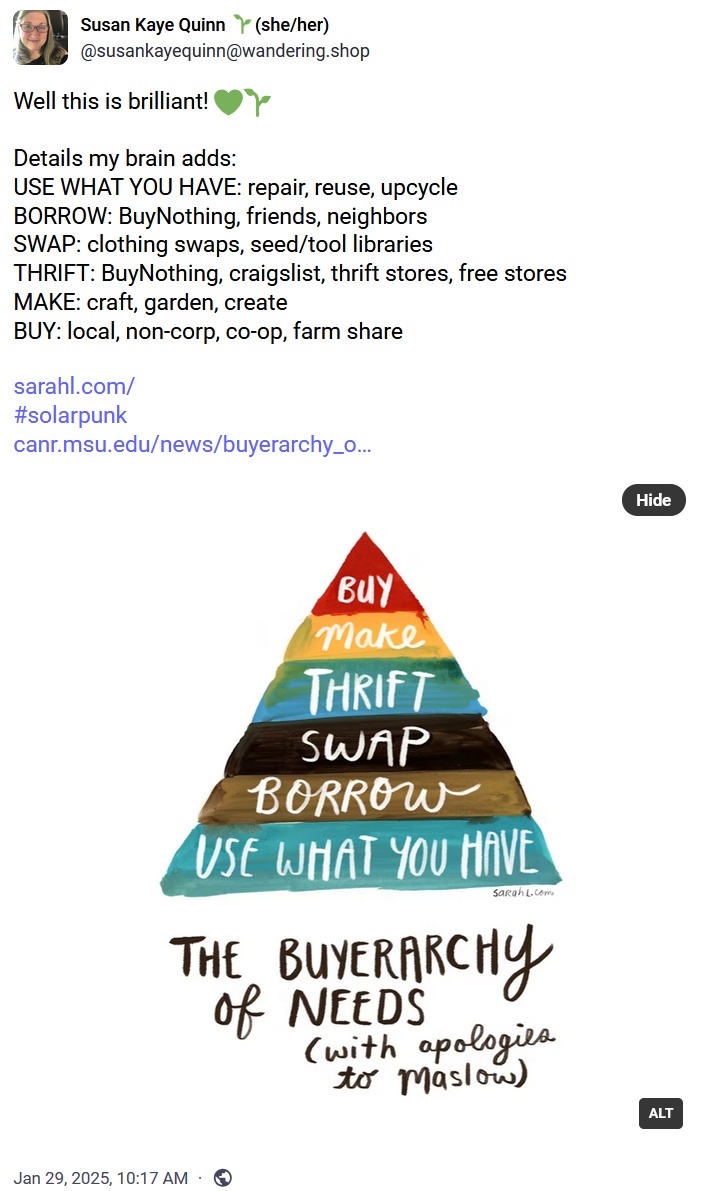
Reducing the amount you buy on Amazon and shopping more local (especially with food) is an outstanding start, but this brilliant graphic (created by Sarah Lazarovic, environmentalist, writer and artist), the Buyerarchy of Needs opens up the possibilities much further… straight into a solarpunk future, at least when I look at it:
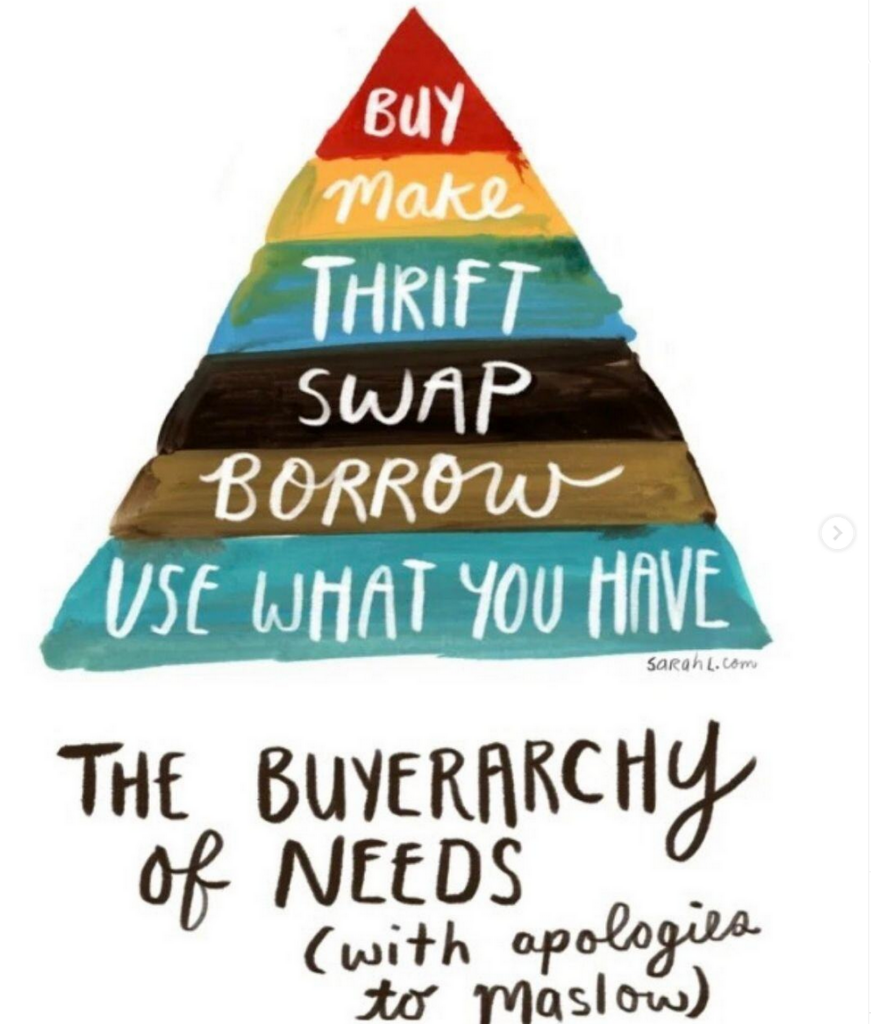
The Buyerarchy of Needs works really well on its own, which is why I wanted to share the original graphic first, without my commentary. It immediately evokes the idea that there’s a mountain of other possibilities that could satisfy our material needs—and even making us question what those needs really are—that it’s probably the inverse of how we are doing things right now. When I first saw this, my brain lit up like crazy because it encapsulated something I’d been working for years to articulate in my own mind and on social media and in my solarpunk stories… that if we were truly going to get to a just and sustainable world, if we really wanted to decarbonize everything, then we would have to radically change what we thought was “acceptable” in meeting the real and material needs people have for things like clothing, household goods, and more. A rejection of consumerism, of hoarding and acquiring, of simply accumulating things and more things, was a start but not anywhere near enough: we need to stop making new things. We need to repair the stuff we already have.
The Buyerarchy of Needs paints a picture of what that looks like.
So I added my interpretation of what each layer of the buyerarchy represents:
Before I dive into all those lists, this gets at the heart of it:
The reason the Buyerarchy of Needs is radical is because it says “there are alternatives to buying cheap shit from Target to get your needs met”—not all of your needs, sure, but way more than you think. And there’s really nothing cheaper than free, which is what most of the pyramid is.
A complaint I hear a lot about sustainable goods—things that are manufactured with less pollution or fair-labor practices—is that people can’t afford it. That’s only for “the rich.” So first (as I emphasize in my post about solar), the cost of something is only partially reflected in the money you pay—you also pay in pollution in your lungs and in your water and in your soil and in a destabilized climate and all the destruction that brings. But second, if you shift the way you consume, you will actually spend a whole lot less on new things because you’re simply buying fewer new things—you’re borrowing and thrifting, you’re swapping and repairing, so when you do buy something new… you can afford to spend more on something that’s not also dumping toxins in the water and using slave labor. And all that is before the tariff insanity not only jacks the prices up and all around like crazy, it will simply make some goods unavailable at any price because it has shut down countless small businesses.
But you, with the Buyerarchy of Needs as your guide, are insulated from some of the insanity because you’ve…
Ok, not really, but I couldn’t resist.
But as you implement these other ways of buying—as you increasingly opt out of the capitalist insanity, support local businesses, keep the money in your community, and reduce the amount of extraction and pollution required to get your needs met—you are building a better world.
Just like the library, you’re prefiguring a solarpunk future today.
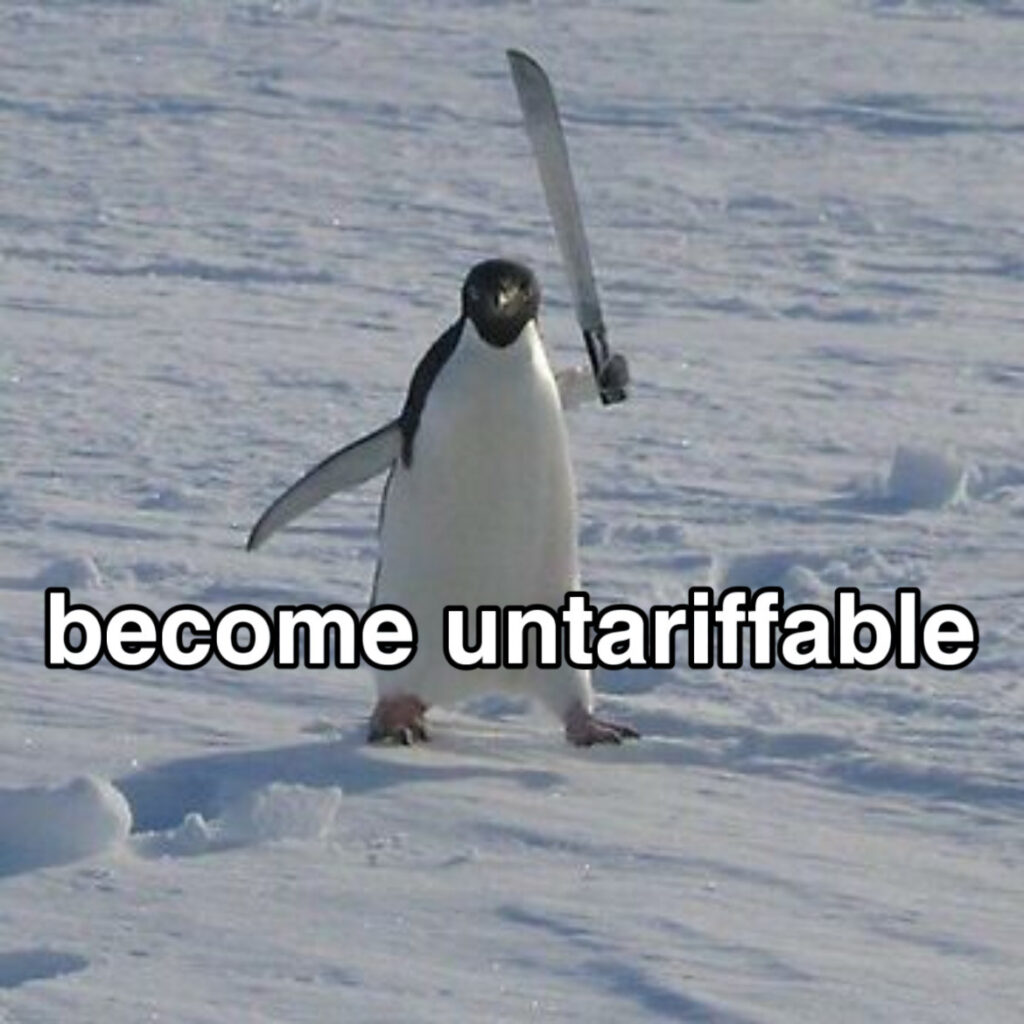
And the more people use these alternative systems, the better they’ll get, the easier they’ll be able to use, etc. But even right away, they make you more resilient. Maybe not untariffable but it’s a strategy for surviving the madness.
Buyerarchy of Needs: Sue’s Expansion Pack
USE WHAT YOU HAVE: repair, reuse, upcycle
BORROW: BuyNothing, friends, neighbors
SWAP: clothing swaps, seed/tool libraries
THRIFT: BuyNothing, craigslist, thrift stores, free stores
MAKE: craft, garden, create
BUY: local, non-corp, co-op, farm share
I’ll expand a little on each of these.
USE WHAT YOU HAVE: this seems obvious but it’s pretty revolutionary, once you start here first with “do I literally have something already that will do the job?” A trivial example: I have these hair ties I bought a long time ago, a pack of like 30, and I rarely use them. They sit in my drawer. I recently was folding zines and needed something to secure several stacks of 25. My immediate thought was: rubber bands! But I don’t have any rubber bands. I mean, I have 3 that I’ve saved from the asparagus, but I quickly ran out. I didn’t want buy rubber bands, especially for such short term usage. Then I realized: hey, the hair ties are perfect! Done. Prior Sue would have probably picked up a bag of rubber bands the next time she was at the Target (which I avoid now, whenever possible). Today Sue is very pleased with her hair-banded solarpunk zines. It’s a small thing, but it’s the shift in mindset that’s important. And it’s not even “frugality” which for some people has negative connotations: it was literally just easier and better to use something I already had.
- Repair: repair also seems obvious but can be revolutionary, especially when you start buying things with an eye toward repairability. I recently bought a Framework laptop specifically because it is modular and repairable — I’m not only getting a laptop that will allow me to replace/repair the keyboard (which is always the first thing to go), I’m supporting a company that’s trying to reduce e-waste by building repairability into their product. The internet is a treasure trove of repair videos. You might not have the skills, but someone out there does: repair doesn’t have to mean you. Maybe you hire someone to do the repairs. Maybe you acquire new skills. Maybe you vow to buy from people who build more sturdy stuff in the future. Maybe you buy someone else’s broken thing and fix it up. Repair kiosks and Repair Cafes are becoming a thing. I’ve started a pile of mending. Visible mending is becoming cool. You’ll see the repair revolution everywhere once you start to look.
- Reuse/upcycle: reuse is pretty obvious, but it also can mean investing in things that will stand up to reuse better. Or repurposing things. Or supporting the artists/craftspeople who are using their skills to reuse and upcycle all kinds of goods. One of my favorite places to shop now is craft fairs because there is so much creativity out there, and I want to support that! I adored Not a Pot — a young woman who took all kinds of thrift store finds (like ceramic dishes or teapots) and drilled holes in the bottom to make them into planters. Creative, keeping stuff out of landfills, and supports a young person trying to build a better world.
BORROW: one of the casualties of a disconnected world is we’re less likely to go borrow an egg from our neighbors. We can start to normalize that again by being the first to reach out (you may need to return it in the form of baked goods!). But we can also use the technology we have to re-imagine borrowing and sharing. I’m a regular user of my local BuyNothing group (yes, it’s on Facebook but it also has an app — I’m off FB now, but I do keep using it specifically for the BuyNothing group; we cannot let the perfect be the enemy of the good). If you’re not familiar, BuyNothing (or Gifting With Integrity — search for both in your area, there’s usually only one) is an online free exchange market. See more below in “SWAP” but one of my first encounters on BuyNothing was actually a borrow — someone needed a pop-up shade canopy for an event and needed to borrow one for the weekend. I had one that had been around since the early days of the pandemic. It was great to have it get some use! I see borrow requests get fulfilled all the time in the group, which serves a local geographic area, so you get a chance to meet your neighbors and you’re minimizing the carbon cost of transport. Win all around!
SWAP: I haven’t used this category as much as I should, and I want to explore more! But I absolutely love the idea of clothing swaps and seed swaps, which are specific events, as well as any kind of library economy, like tool libraries, either at the literal library or set up in someone’s front yard. One of my absolute favorite concepts is the craft-reuse idea, embodied by my local Creative Reuse shop, which takes in craft donations and resells them cheaper than new, which funds the operation and employs folks as well. These kinds of things fly way under the radar—just today I had someone on Mastodon tell me they didn’t think there were any CSA/farm shares in Britain! (Spoiler alert: there are many)
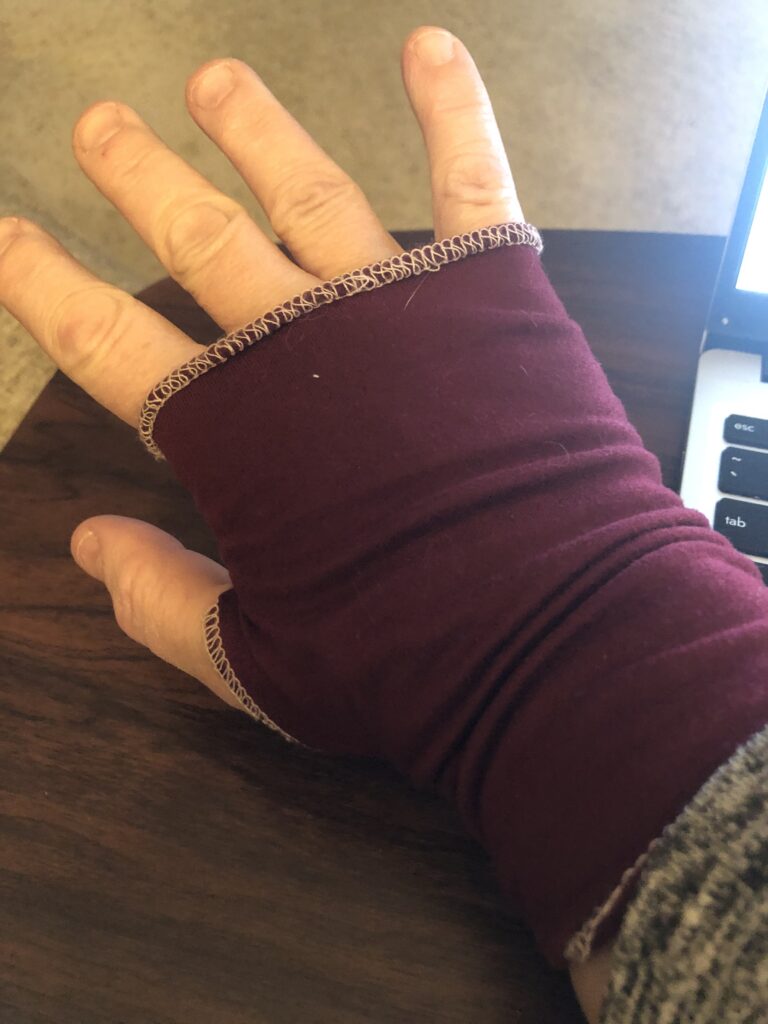
This is the biggest hurdle: we think something doesn’t exist because we haven’t seen it. When the truth is there are all kinds of alternate systems to the one you hate already in existence, often right in your backyard. We’ve been trained by capitalism to think there is only one way of getting our material needs met—by the latest shiny thing that corporations have manufactured while polluting the earth and spending a ton of money on targeted advertising to sell to you. But I guaranteed you, friends, it’s not as cool as the gloves I found at the craft fair that I love so much, I got some for my daughter (this is a BUY category item: local, non-corporate, and kind of falls in the MAKE category as well because it’s hand-crafted):
THRIFT: I’ve watched with excitement as thrifting has become more normalized, especially as people search for more ethical clothing choices and a way to opt out of fast fashion. I’ve also personally worked toward finding more ethical clothing manufacturers, especially when I’m buying gifts for the kids (although I’ve gotten them thrifted stuff too, including a recent foray into using ThredUp, the online thrift shop that works great for me because plus sizes are hard to find in regular thrift stores). But BuyNothing is really a form of thrifting, as is any free store, the normal thrifting stores in your local area, and anyplace where you’re buying/acquiring used goods: this is key. The world is awash in goods that have already been manufactured, their carbon costs are already spent, but they’re simply in the wrong place—one person no longer has use for them but another would find it exactly what they need. I’ve thought a lot about distribution systems, how we actually move goods, not just the first time, but all the times after that. Imagine a circular economy where goods get used as many times as possible, until their functionality is spent, and then they get either recycled or upcycled. Only as a last resort would we bury something in the ground (and please, never ever burn it—we have enough crap in the air that we’re breathing into our lungs and it’s killing us). Craigslist, Ebay, Facebook Marketplace, BuyNothing, thrift stores (online and off), free stores, clothing swaps can also be seen in this category: all of these are ways to match people with stuff to people who need stuff. And the more we use these systems, the more we encourage them to improve, get more efficient with transport, easier to use, etc.
Start by thinking of the lifecycle of a thing: how much goes into manufacturing it and then the hurdles to getting the most usage out of that carbon burnt to produce it. Even just picturing that lifecycle can help change your mindset: you might be less inclined to buy something new, more inclined to look for alternatives, more likely to clean out the basement and get goods flowing back into the system, where it can be put to use. This isn’t easy, it takes time, and I get that there are limits on all of it.
And yet, this is the beginning of change. And change happens more easily when our old ways are disrupted. Use the disruption of this time as an opportunity to change your habits of consumption.
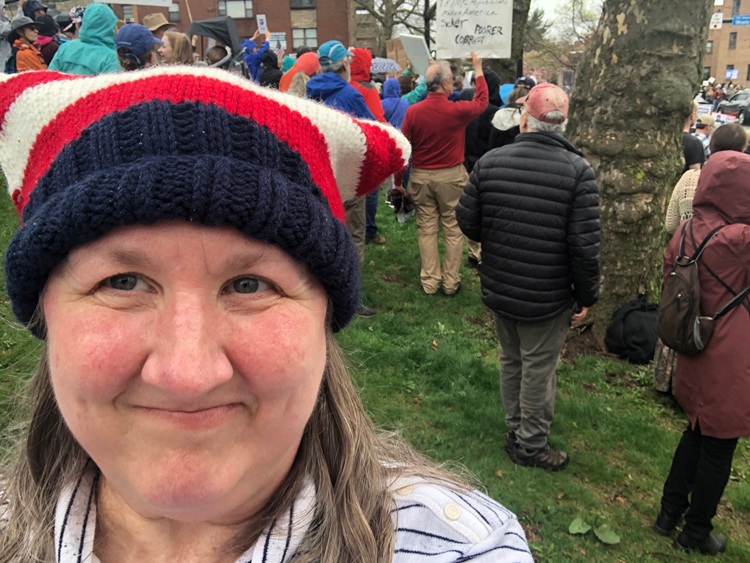
MAKE: this is by far my most favorite category. I’m a creative person and an engineer, I love to make things, even if most of those things are made with words, I have a deep appreciation for any human-made art. Solarpunk culture is conjoined with DIY culture and maker spaces and arts and crafts of all kinds. How much better is a homemade gift? My friend Jen made this resistance hat for me and it is already one of my treasured things (she shared the pattern if you want to make your own):
I shop at craft fairs and art fairs more often than malls (I never go to the mall tbh). Crafting hobbies can be a whole expensive thing of their own which just means it’s another opportunity to find ways to reuse materials and supplies, ways to network with your local crafters (building community!), ways to have your creations embody the Buyerarchy of Needs and circular economy ideas as well (look for a creative reuse shop near you). Creating is one of those many-benefits things: it’s fundamentally a life-giving act to create, so it benefits the person doing the making; it benefits the person on the receiving end (if it’s a gift) because there’s not a better way to say you care than with the gift of your time; if you’re purchasing someone else’s arts/crafts/hand-made items, you’re likely supporting a small local business, keeping money in your economy and helping build a world where someone can make a living with their art. I’ve long said you have to support the art you want to see in the world (with your dollars), but when you expand that to include crafters making all kinds of items that you might otherwise buy a cheaply manufactured version from Target, you’re starting to see the power of changing your mindset.
And while hand-crafted things may well cost more than their cheap corporate cousins, when you’re saving money by thrifting or swapping or borrowing, you can start to afford to invest in quality items, things that support artisans and local stores.
BUY: I have a whole hierarchy-within-the-hierarchy when it comes to buying things. Because you will have to buy new things (although Trump seems determined to crash the economy by making every new thing more expensive, so much so that even used things like cars are already rising in price). Buying new is another opportunity to find alternatives to the corporate asshattery that is destroying the world.
BUYING HIERARCHY:
- Can I buy it from a craft/art fair? Technically “new” but borderline with the MAKE category.
- Can I buy it from a local store? This reduces transport costs. For food, it’s the farm share.
- Can I buy it from a non-corporate store? My favorite bakeries and food stores are co-ops (find co-ops here). My favorite coffee shop has only two stores. You likely pass small businesses all the time on the way to the Target (I keep picking on Target because they scrubbed their “DEI” so fuck them) Buying online from non-corporate stores also works, but I try to avoid shipping when possible because of carbon costs. Non-corporate stores are also less likely to jerk you around with pricing. While egg prices were soaring at every corporate grocery store, my food co-op could keep prices low because they had relationships with local suppliers.
- Can I get it sustainable/fair-trade? There’s no question that sustainably-made goods will cost more. They’re building in the cost that normally gets externalized into pollution that we later breathe into our lungs. But buying sustainable/fair-trade doesn’t just feel good, these companies are often the trailblazers that are creating new manufacturing processes or distribution systems, or even whole economic systems for the people doing the labor. That extra cost is literally helping to fund a sustainable future by growing the industries that lead the way.
- Can I buy it direct? If I can’t find what I need anywhere else but Amazon… I will still try to buy it elsewhere. I’ll use Amazon as a (shitty) search engine, see who the manufacturer is, then see if they have an online store. My most recent score on this was a riser for my book display table for in-person events where I will be selling my books. Not something that’s easy to find used (although a good example of something that rarely gets used and I should make sure gets cycled back out into the world when I’m done with it). I found what I needed on Amazon, but the manufacturer also had it on their website store, plus the selection there was much better! Now, the website was clunky, but the cost was 30% less (including shipping), so I actually saved money not buying it on Amazon. And I would never have known if I hadn’t gone looking.
- Sometimes convenience trumps everything and you buy from the corporate overlords. Do not beat yourself up about this. If you try even half the things in this post you are radically undermining the system that wants you to mindlessly buy buy buy whatever they’re rolling out next and never question whether it makes your life worse or not.
None of this is about personal austerity or personal morality: it is entirely about disrupting a system that’s killing us. Which is why there are no absolutes. I still buy from Amazon (sometimes). I still send stuff to the landfill (if I must). I buy cheap plastic shit from China (if I absolutely can’t avoid it). This isn’t about perfection, this is about change.
If you start to engage with this idea and try some of these things out, I think you’ll quickly find there are huge benefits to engaging in marketplaces that aren’t soulless corporations out to destroy you and everything you love. That building communities builds resilience. That thrifting and swapping is fun but also makes you less vulnerable to the whims of some demented billionaire who’s decided overnight to tariff everything, including flightless birds.
I started out talking about gardens—how our reflex in this capitalistic hellscape and time of uncertainty is to turn to “self sufficiency” or some fantasy of being independent of the chaos in the world. This is understandable but the exact opposite of what we need to do: which is to lean into community building, understanding where food and other goods come from, seek out and find the circular economy already humming along in our backyard, and build resilience together.
You won’t solve the world’s problems by changing your mindset about consumption.
But you can use the chaos as an opportunity to build something better, right where you are.