For a long time, I resisted reading Murderbot, despite all the accolades (for reasons I’ll get into in a sec). I just finished watching it on Apple+, it’s brilliant, hopepunk AF, you should definitely watch/read it.

I’ve read Science Fiction since I was a kid in the 70s, and I’ve been a huge fan of “sentient robot” stories all along.
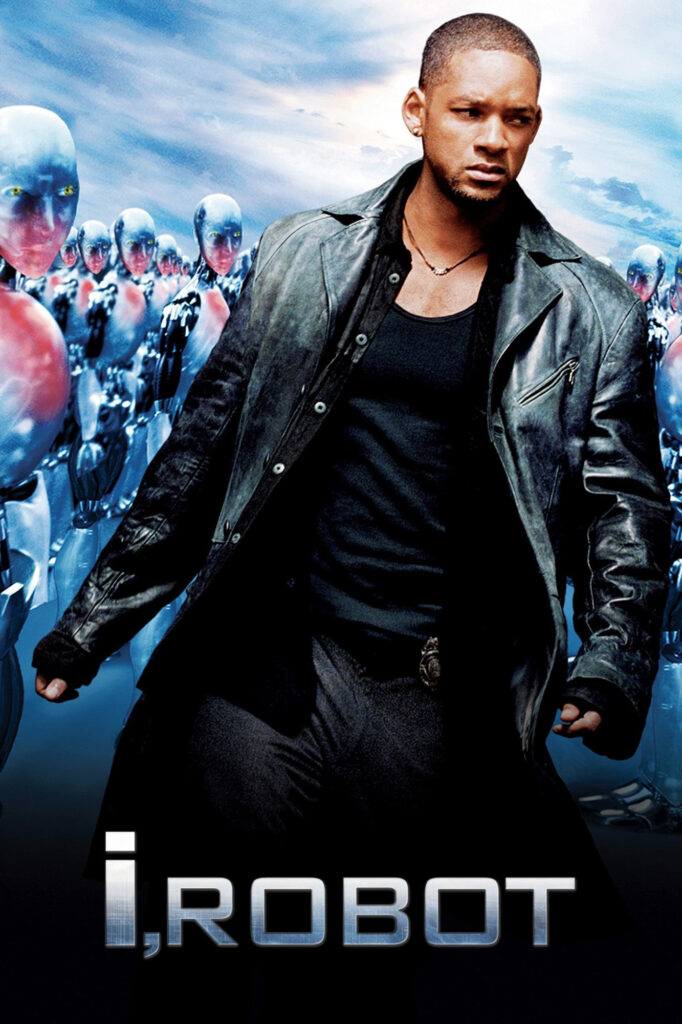
I, ROBOT and BICENTENNIAL MAN were some of my absolute favs, and I was beside myself when I, ROBOT went to film.
These stories pinged hard on my social justice nerves plus there was nerdy cool tech.
I’ve also written stories about the morality and implications of creating “artificial intelligence” both in enhanced humans and machine intelligence.
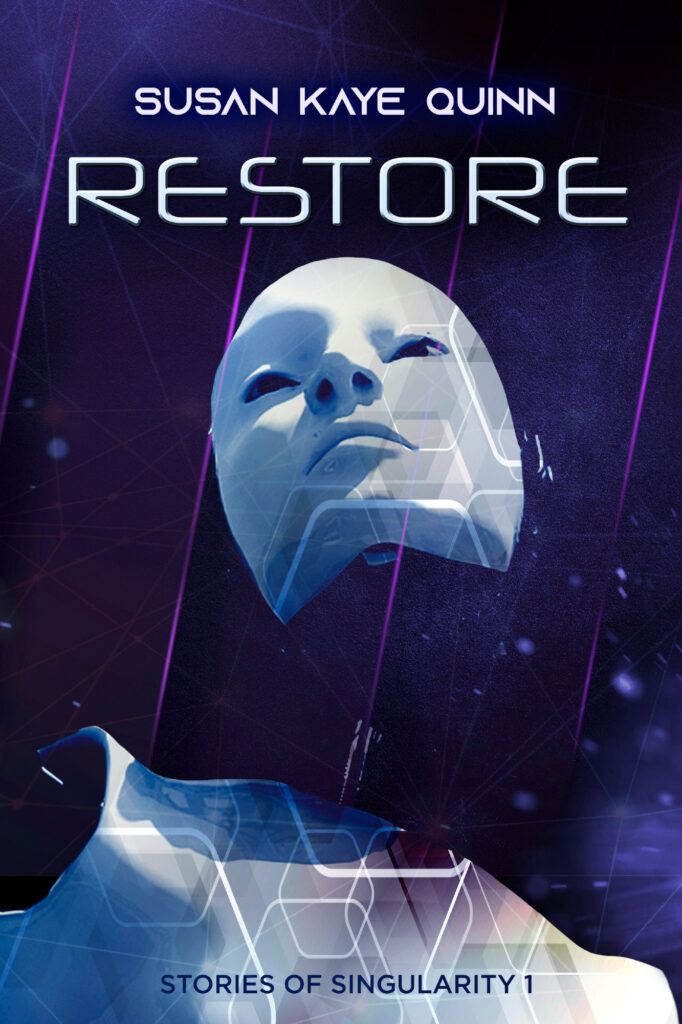
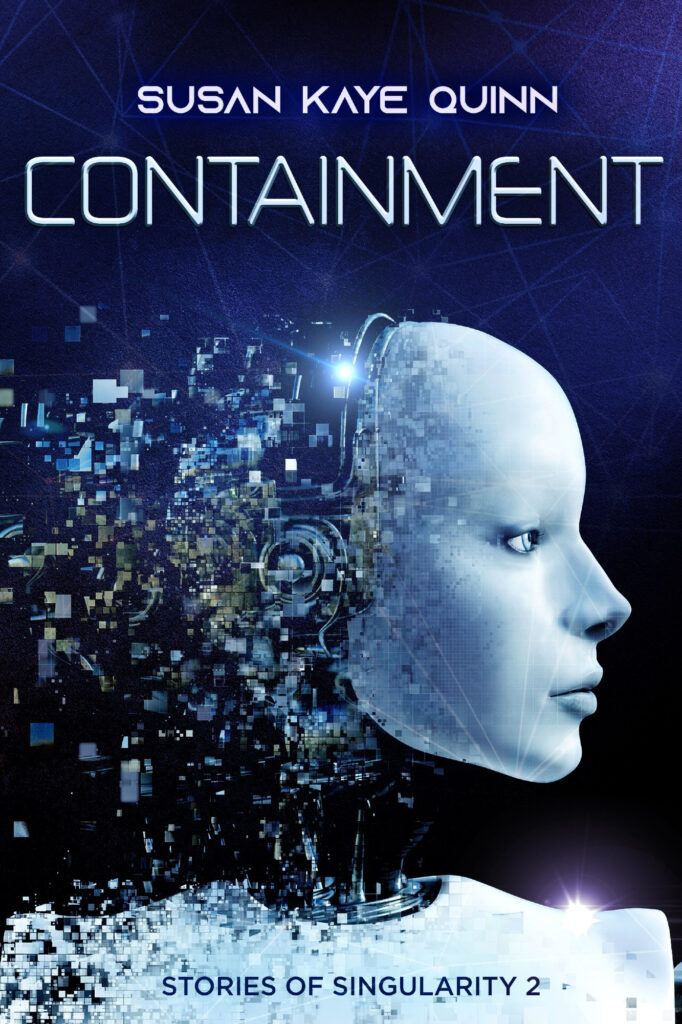
My Singularity Series is about the human side, with these two short stories directly about limiting bot intelligence (much like Murderbot’s governor module).
So why the resistance to Murderbot?
In short, because AI companies are using the “sentient bot” story as part of their genAI hype and con, both the cozy version and the scary skynet version (and the prospect of “AGI” or “artificial generalized intelligence”).
The longer reason: I’ve been increasingly concerned about our storytelling around AI for a decade.
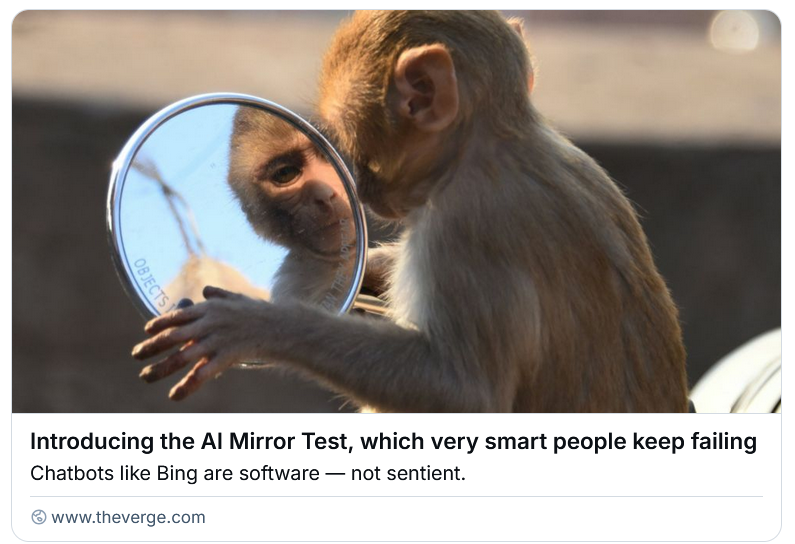
People still routinely think genAI’s mimicry is the real thing. Lots of humans still fail the mirror test. And they buy into the latest round of hype about the bots “gaining sentience any moment” (helping AI corps get more venture capital and government cash).
A decade ago, when I was writing Singularity and long before chatGPT burst on the scene like a malignant tumor, I was concerned that our storytelling around artificial intelligence wasn’t evolving. We were stuck on skynet and I, Robot (as much as I love the latter).
Science Fiction has had (and is still entrenched in) a nostalgia problem—we keep telling the same stories over and over, and oh yeah, they just happen to reinforce patriarchy, imperialism, and a lot of other bad shit like excusing anything tech does… and this was extremely true in storytelling about bots.
I was talking a lot about this in 2018 (I should go dig up those posts) but basically, we needed new storytelling around tech, machine intelligence in particular, and Hollywood flailed around for a while but the best we got was WALL-E… the worst was Ex Machina and Transcendence type movies.
Black Mirror was the closest to saying “hey, Tech is fuuuuucked up” but as much success as that had, when chatGPT arrived, it was all Terminator and Her (the movie) stories that people reached for.
We’d created a very limited language around bots and the AI corps had weaponized that against us.
This is when I wrote my Black Mirror-esque, anti-AI stories, by the way.
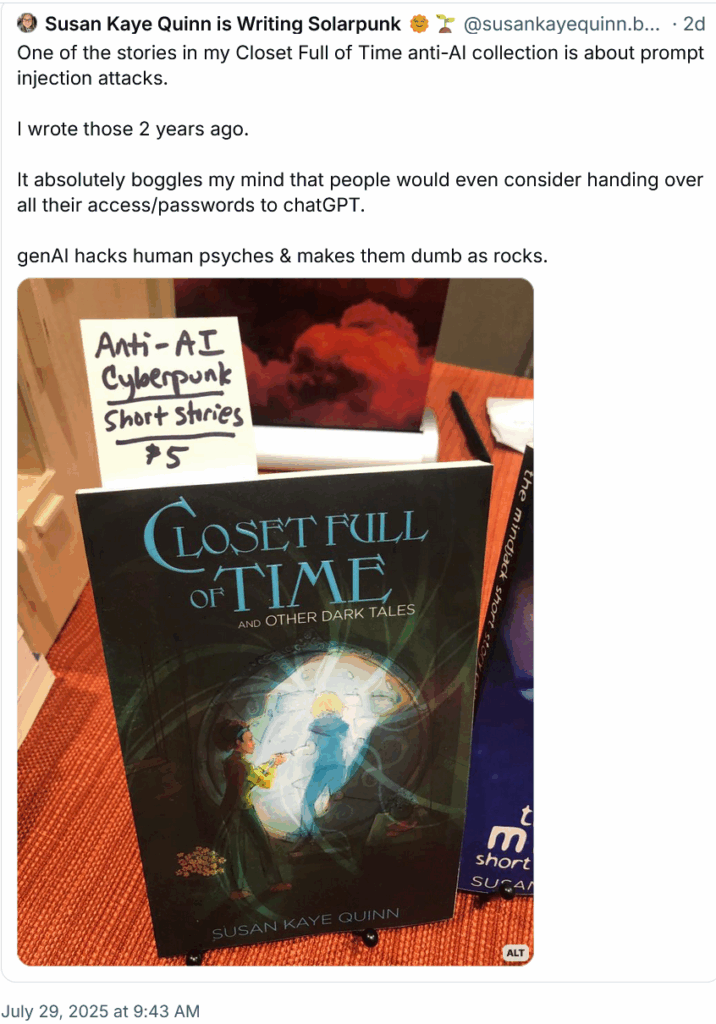
So I was feeling some kinda way when Murderbot broke out and it wasn’t good. It’s on me that I prejudged, but I was thinking “MY GOD we do not need another sentient bot story” and in my defense some stories that had been picked up by Hollywood were VERY BAD (ie genAI apologia).
Murderbot is not that.
The show beautifully uses our fascination with the sentient bot storyline to go full hopepunk with the hippie “clients” of SecUnit and BLESS Martha Wells for that.
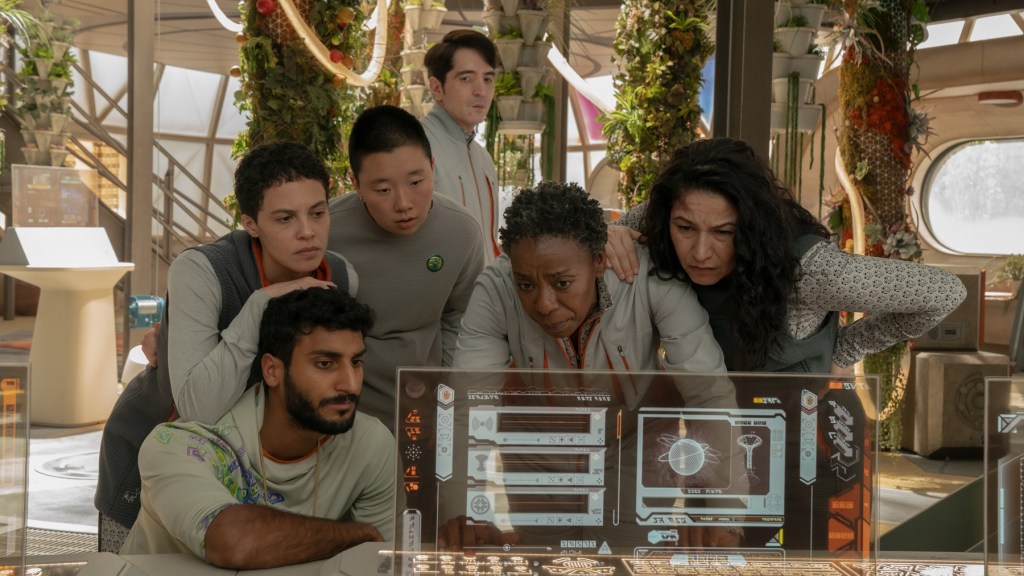
I’m resigned to the fact that we’ll have to come in sideways to get hopepunk (much less solarpunk!) concepts out into the mainstream storytelling world.
That is what Murderbot does.
So I was wrong, I’m glad Murderbot is so popular, and I’ll be adding it to my (growing!) list of hopepunk and solarpunk stories that are the NEW stories we need to tell to create a more just and sustainable world.
I won’t say my Singularity series is like Murderbot (not in any kind of plot sense), but if you want hopepunk-y Sci-Fi, that’s what my 4-novel, 7-short-story series of enhanced human/bot intelligence is all about.
(for you to read or listen to while you wait for more Murderbot)
ONE MORE THING: hopepunk storytelling is FRESH.
I talk about this in an article I wrote for DreamForge Magazine:
“Mainstream storytellers across mediums (short stories, books, TV, film, games) are rummaging around in the hopepunk bin and coming up with fresh twists. Hopepunk elements like “cooperative plot line” or “character who chooses radical compassion” enliven these stories and endear the audience.
In other words, hope is popular. Just don’t call it hopepunk.“
(psst… you can share this post on Mastodon or Bluesky; you can find all my books in the drop-down “books” tab at the top; subscribe on the sidebar to get blog posts like this one; subscribe here to get notified when I have news or new book releases; I also have a podcast, Bright Green Futures, about lifting up stories of a more just and sustainable world… because we sure need something different than the one we have)