I put solar on my roof three years ago, and since then, I’ve helped plenty of solar-curious friends figure out the options—there are plenty (and you don’t need a PhD in Environmental Engineering to figure them out).

GET SOLAR TO SAVE THE PLANET
People immediately want to know if solar will save them money, or how long it will take to pay itself back, and I will definitely get to that (and how Trump is going after tax credits), but I need you to understand: nothing in our world prices in the cost of destroying the ecosphere we depend upon for life. There are massive changes that need to be made at every level of our culture—what we eat, how we shop, how things are made, how energy is harvested. Our entire global system is massively unsustainable.
That which is unsustainable will not sustain.
We’re seeing the breakdown already.
We’ll get to the details on solar costs, and I do realize that money-costs are important, but I really hope you’ll consider that the “cost” of how we heat/cool our homes and power our lives is only partially paid by dollars we send to the electric company and mostly paid by pollution we breathe into our lungs and the climate disasters that can strike any one of us at any time.
Just being real about what’s at stake here.
GET SOLAR TO LITERALLY TAKE POWER FROM THE UTILITY COMPANY
Aka, Part 2: Sue the Radical. I cannot overemphasize how radical it is to have a power generator on your roof that harvests free clean energy whenever the sun shines. Most people have no idea how much the power companies do not want you to have solar and any indications otherwise are entirely the laws (passed by Democrats) that have forced them to accept distributed power generation as a fact they have to work around. Which they do—they take that money you send them every month and use it for climate disinformation campaigns (you should absolutely contact your state reps and tell them to pass legislation to stop that). Having solar means directly defunding fossil fuel propaganda. It’s a fantastic bonus.
(I won’t be telling you the goal is to go off-grid because the goal should be to have a community system of green energy that’s resilient for everyone, and the grid plays a key part of that. I will tell you the utility company does not need to be in charge of that. Microgrids are a huge climate solution but we will have to fight a lot to get there and everyone who gets solar moves us one step closer.)
GET SOLAR FOR CLIMATE RESILIENCE
If you can afford a home battery, I highly recommend it, but even without a home battery, having solar gives you power whenever the sun shines. This gets knocks as a disadvantage of solar, but there is no other energy source that automatically replenishes the next day when the sun rises. Grids go out, especially in climate disasters. Gas stations run out of gas, especially in climate disasters. The time when you need power the most is when the highly tenuous system of digging fossil fuels out of the ground, refining them, and transporting them long distances will fail. Your gas backup generator runs as long as you have gas. The solar on your roof runs as long as the sun still rises in the morning. It’s intrinsically more reliable.
Having a backup home battery covers mostly short outages—which are mostly inconveniences, unless you have some critical home medical equipment or it happens to be really fucking cold or really fucking hot, which will definitely happen more often in the years ahead. Even a gas furnace needs electricity to run, but AC will increasingly be not optional for many people. The world is just getting hotter, remember?
If you have an EV, you can (with some effort, for some EVs) connect that to your home heating/cooling system for backup power during longer outages.
For reference, my 13 kWh home battery will hold me for about 24 hours (without heating/cooling). If there’s an outage during a heat event, the solar will power the AC and the battery will hold me overnight. But if there’s an extended outage in the winter due to the polar vortex dropping the temperature to extreme negatives, that home battery won’t last long (and solar is less in the winter, plus there’s likely storm clouds). For that, my 77 kWh Hyundai Ioniq 6 battery hooked up directly to my heat pump (with backup gas furnace) will heat/cool me for days. The Ioniq is one of the few EVs on the market with V2L (Vehicle-to-Load also called bidirectional charging) that lets you basically plug an extension cord into your car and use it as a massive backup power generator. So when you’re shopping for an EV, keep in mind you may want to use it for backup power, so that’s a valuable feature to have (Hyundai EVs are really fantastic for range/charging as well as having V2L; if the Chevy Bolt gets re-released, I’ve heard it will have V2L, but who knows in this crazy environment with Trump attacking everything EV).
More on backup power here:
So hopefully I’ve explained why getting solar is more than just saving money on your electric bill—I don’t know how much these other things are worth to you, but they’re worth a lot to me (especially the climate resilience part). But no matter how much you want solar, there can be all kinds of barriers: cost, access, suitability of your roof, etc.
Okay, let’s get into it.
IF YOU LIVE IN AN APARTMENT: COMMUNITY SOLAR
People automatically assume if you live in an apartment or condo, you can’t get access to solar.
First, don’t underestimate the power of working together — you could simply ask your landlord whether they would consider getting solar. Or put a petition together and circulate it among the tenants. A climate resilient future is one where we’ve got better-functioning communities, and there’s nothing like a community project to pull people together and give them a reason to get to know one another. And if it fails — if you circulate your petition, ask the landlord, and it goes nowhere — you’ll still have made those connections. You will also become known as the “person who knows about solar” (ask me how I know) and you’ll have broken the silence about climate change and climate disaster resilience, which is a key part of empowering change. But also… the next time there’s a power outage or, worse, a legit disaster strikes close to home, people will remember that you tried to get everyone to go in on solar. And they just might be more open to that now that climate change is on their doorstep.
But, increasingly, community solar is also an option.
(And plug-in or “balcony” solar is an exciting growing option in the US! Read more about it in Bill McKibben’s newsletter which you should totally subscribe to.)
Community solar is like farm share, but with a solar field instead of a farm field: basically you “buy in” with a share of the solar farm and you get a portion of the green energy generated. These are fantastic and part of the “microgrid” concept where you communally fund solar, put the panels where they’re best suited to go, and then use it to power the community. These are popping up all over, and the best part is that it doesn’t cost any more than you’re already paying for electricity (in fact you will save money): you’re just paying to be part of the solar farm instead of sending money to the power company. And unlike some “energy credit” systems (or often the “green energy provider” that’s an option through your power company) where you’re just shifting credits around and not really generating new solar energy by installing new solar panels in the community, community solar is the real deal: you’re helping fund new solar energy farms in your local area.

Find out if you have community solar available in your area on Energy Sage. (just enter your zip code and see what community solar farms are available to join)
I don’t get any money or affiliate links or whatever to recommend Energy Sage — they were recommended by the Sierra Club and other environmental organizations and they’re filling a need for a simple portal to help connect people with community solar and solar installers. In a world where it’s hard to know what to trust online, I trust Energy Sage and refer people there often as a first step to getting started with solar.
IF YOU LIVE IN AN APARTMENT: BALCONY SOLAR (updated: July 2026)
Balcony solar is the latest hot thing, rapidly being adopted throughout Europe and even now in the States! (Canadian friends, check out this push to bring balcony solar to Canada!) It’s safe, it’s cheap, and it allows folks to help green up their energy use directly. No, it’s not going to power your entire apartment, but with it so accessible, millions of people are using it, and that adds up fast. (Balcony solar plugs directly into your regular wall socket; it’s about as simple as it gets; also, it shuts off in a power outage. I love this article about pairing balcony solar with batteries that you can plug the solar into directly so you can actually safely keep using the solar in an outage!). And there’s a new program to get balcony solar at cost: check it out.
IF YOU LIVE IN A HOUSE: ROOFTOP SOLAR
There are two important questions to ask before you get too far down the road with solar:
- How old is your roof? Generally, you want to install solar on a roof that’s less than 10 years old. If your roof is older, it’s probably best to wait until you replace the roof, and plan for solar then: it’s the ideal time. But you can work with a roof that’s under 10 years. Solar actually protects your roof: you’ll be putting it on the sunny side, which is where most roofs degrade fastest, and today’s solar panels are guaranteed to withstand hail, winds, etc — literally hurricane grade levels are available for y’all in the Southern US. (Likewise, if you’ve got an older house that predates modern building codes, make sure it’s strong enough to support the panels—your installer should know the codes and check for that).
- Is your house shaded a lot? I’m not talking one or two trees, but if you live deep in the forest, you might have a hard time getting sun onto your solar panels. Generally, you’ll only put solar on your south (and maybe west) facing portions of your roofs, but roofs be crazy — mine is broken up by all kinds of fancy architectural things that were Tetris for the solar installers. But they made it work! The only thing you really gotta have is sun.
Note that I didn’t say “oh if you live in a certain latitude, forget it!” The sun literally falls on every part of the Earth. See that red star on the Solar Irradiance map? That’s where I live. Almost in the “do you even have sun there?” category. And yet my solar panels make 75% of my annual energy usage (including 2 EVs, heat pump, induction cooktop): in summer, my solar powers my AC; in spring/fall, I’m sending energy back to the grid; it’s only in winter that most of my energy comes from the utility.
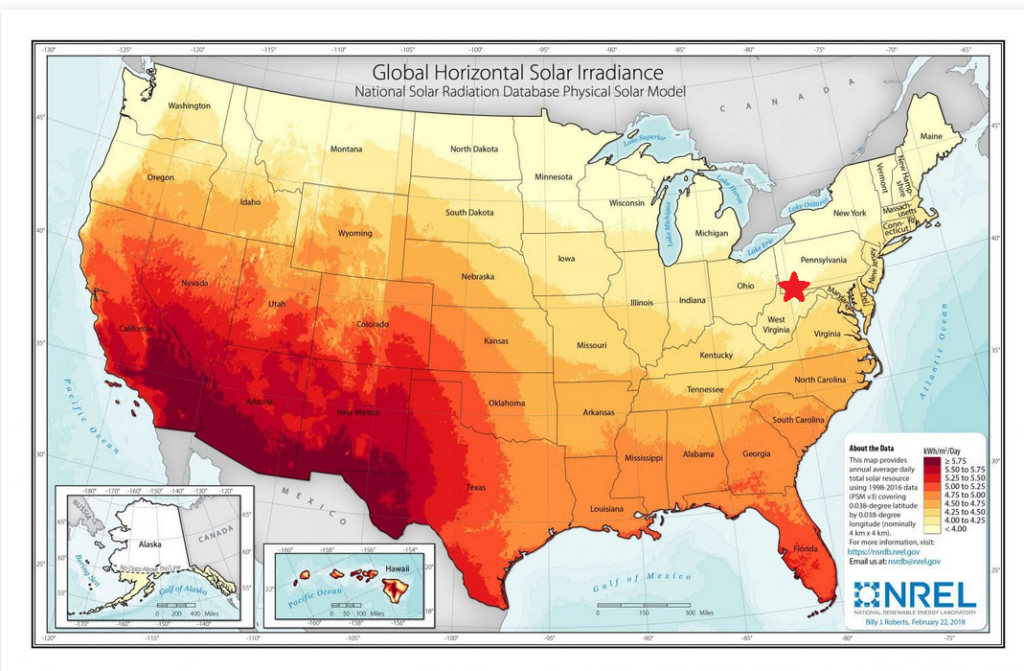
MY PEOPLE: if you are anywhere in any of those reddish areas, get ye some solar! I can’t even imagine how much power you can make. But for the rest of us orange & yellow zoners, trust me when I say you absolutely can make a bunch of power with solar panels where you live. I will say that being covered in snow reduces solar panel effectiveness to zero — but I’ve also found that snow doesn’t last on the panels either. They heat and clear off long before the rest of the roof.
GETTING ESTIMATES FOR ROOFTOP SOLAR
I’ll cover how to pay for the solar in the next section, but first you gotta figure out how much we’re talking about. Roughly, we’re talking $15-$30,000, depending on all kinds of things, including whether you get a home battery. Prices are dropping all the time, every house is unique, and it really depends on how many panels you get (I recommend getting as many as fit on your roof). Although I will say the tariff chaos will have a not-good impact on pricing.
Getting solar is like remodeling your kitchen: it’s a big project, costly, you’ll probably take out a loan for it, but in the end, you’ll have a lovely kitchen and you’ll get back some of the cost when you sell your home. In the case of solar, you’ll save on your electric bill and the value of your house goes up, so you’ll recoup much of that when you sell. In either case, you would definitely want to get a couple estimates from trusted contractors to do the work. (“Trusted contractors” is tricky, I know, but that’s true for any project: look for people with experience specifically in installing solar.)
This is where I once again recommend Energy Sage:
They have tons of information but they will also connect you with installers. These folks will either take the image of your house off Google Maps or come fly a drone over your house (my installer did both), and use their fancy layout software to place panels on your roof and give you an estimate of how much it will cost (panels, inverter, home battery if you’re getting that, installation, electrical work to connect everything), how much power it will make (based on your location on the irradiance map, varying over the year), and usually will have financing deals as well.
Early on, there were a lot of scammers out there, taking advantage of well-meaning people who didn’t know how to get started. There are still scammers, but that’s what Energy Sage helps with — I won’t say they perfectly vet every installer, but they do have some minimum requirements. And you gotta use your common sense — if someone’s hard core selling you, or wants to sign you up for things you don’t understand, that’s a red flag. Also look for installers with experience and people who are happy with their solar installs.
Be warned, it is true that electricians are in super high demand and it may take time to get estimates and installation done: my project took about 10 months but that was during supply chain problems in 2021-2022. Then again, we now have an insane clown in the White House imposing tariffs on penguins and crashing the stock market, so you know… plan ahead. Might take a while to fight through the nonsense. But I’d also grab that 30% clean energy tax credit before Trump gets around to eliminating it.
NOTE TO DIYers: It is absolutely possible to DIY your own solar… if you are a professional electrician. And willing/able to navigate the permitting and physically willing to climb on your own roof. Even then, you’ll need help (most likely). I do know DIYers and they’re amazing, so I’m not gonna say it’s not possible. You will definitely save money because a lot of the cost is in installation and electrical work. But it is some major work with high levels of expertise and some physical risks, and most folks are better off paying experts to do it.
NOTE ON CO-OPS: I highly recommend you check out Solar United Neighbors and get on their mailing list–they do advocacy and also run solar co-ops, which means they organize a bunch of people in a local area that are interested in getting solar and vet installers and negotiate lower prices. It’s hella cool and I’m bummed they weren’t running a co-op when I wanted to get my solar. Otherwise, I would have totally been in.
IMPORTANT NOTE ON ESTIMATES: when you’re getting estimates, tell the installers whether you want a home battery for backup, and whether you get a battery or not, you want to be able to operate on solar during an outage. Regulations vary by state and even municipality, but in general, you should be able to set up a system where you can disconnect from the grid during an outage and operate solely on solar (this is for safety reasons, so you’re not sending power to the grid while they’re trying to fix it). My Tesla home battery (I know I know, I hate him too, but it was the only option in the supply chain crunch; now I would 100% get a GM home battery system that you can plug your EV into) is integrated with the inverter (the thing that converts the solar DC to AC power your house uses—everyone will have an inverter as part of the package), and the battery/inverter has the ability to automatically disconnect from the grid and run on battery/solar during an outage. It also manages the minute-to-minute fluctuations of energy between solar, grid, (battery optional) and your home.
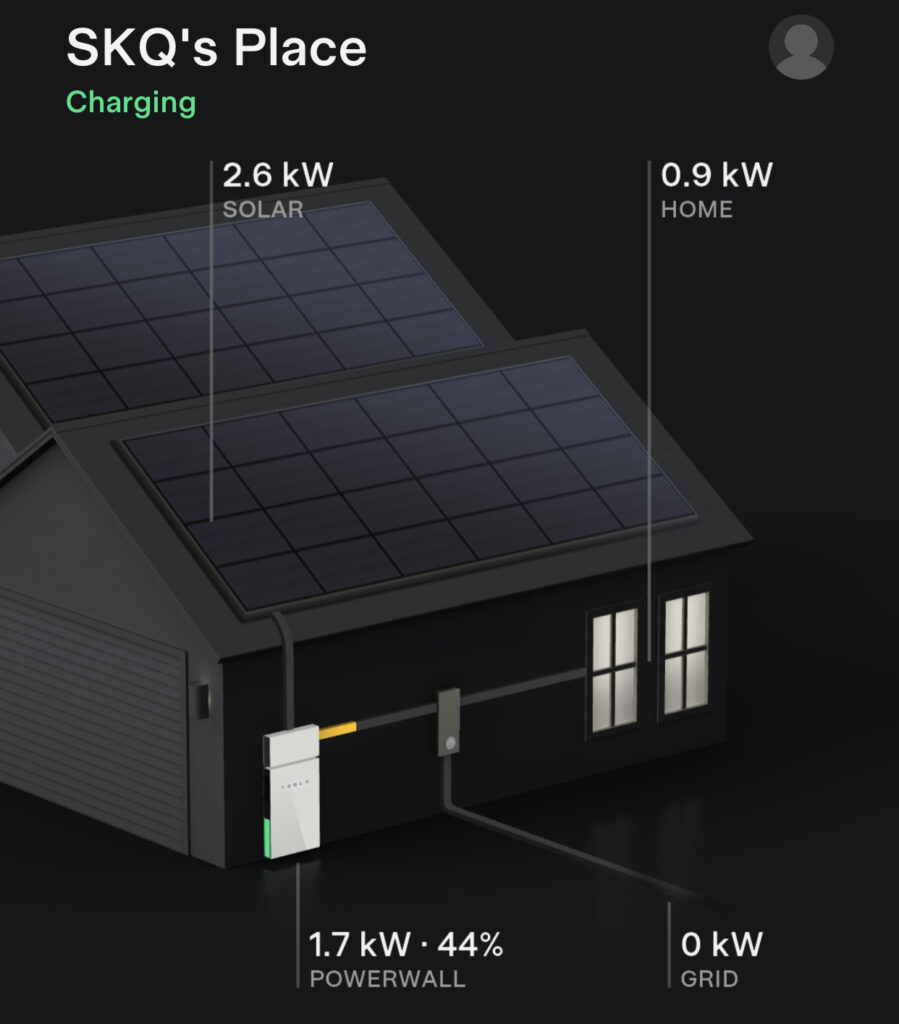
One more tiny sidebar: When I had the electrical work done for the solar, I also had them set up a circuit box so I could have a “fast” (really medium slow) charger in my garage for my EV. I wish I had also done the wiring for my induction cooktop that I got later. It’s always better to get all electrical work done at the same time, if you can (see: shortage of electricians).
HOW TO PAY FOR ROOFTOP SOLAR
Beyond the non-monetary benefits of a cleaner world, defunding fossil fuel propaganda, and climate resilience, solar has monetary cost considerations most people don’t think about:
- reduced electric and gas bills: If you get a heat pump and run it off your solar, most of your heating/cooling energy needs could be covered by free energy from the sun. And that includes gasoline bills too, if you have EVs.
- proofing against rate increases: solar panels last for 30+ years (some are 45 years old and going strong with only minimal losses in efficiency). Do you think perhaps energy prices might have some volatility over that time? My power company is raising rates this summer. Most people try to calculate a return-on-investment of their solar panels based on today’s energy prices, but those are guaranteed to be too low. Energy prices go up and down but mostly up — especially as climate change continues wreck havoc on the world. Meanwhile, you will be sitting pretty in your solar house with guaranteed power coming in whenever the sun rises. Whatever payback time you calculate based on current energy rates (let’s say 5 years), you’re essentially saying “and I get free energy after that for 25+ years during the hellscape climate change that will be happening during that time.” And that’s a hell of a deal.
- your house value will increase with solar: this is a hard one to put a number on, and real estate markets are volatile and going to get worse with climate change, but I feel very comfortable saying that a house that already has solar installed is one people will pay more for. Not only do they avoid all the hassle you’re going through right now to install it, they get all the benefits, and those go way beyond the reduction in their electric bill. Those non-monetary benefits above? They will have a monetary value when you sell your house. Zillow says solar homes sell for about 4% more — which can easily cover the cost of your system. This is one reason I tell people not to worry about whether they will be moving—if you move, you actually will get paid back sooner on your investment in solar.
- tax credits, SRECs, net metering: the main incentive out there for solar came through Biden’s Inflation Reduction Act (which was criminally unappreciated), which gives 30% tax credits on solar installation (the whole thing). But my state also has SRECs, a complicated mostly-shenanigan system that sells my solar credits to fossil fuel companies wanting offsets, but it does put about $100 a quarter in my checking account (I donate it to Go Sun to help low-income folks get solar because fuck the fossil fuel industry). And then there’s net metering, which is when you send solar power back to the grid and the power company has to give you credits which you can spend later (basically you can use the grid like a giant battery, which is how the grid actually functions anyway). Make sure your state has net metering because Republicans are trying to kill that too. Upshot: there are lots of smaller benefits, and tax credits are not small—get those while you can.
THE THREE WAYS TO PAY
1 – Pay Up Front or Take Out A Loan (Recommended): the kitchen remodel analogy works well here — you would likely pay up front for that or maybe take out a home-improvement loan. Different folks will have access to different kinds of credit, but secondary loans through your mortgage company are common. Solar installers also pair with financing companies, so they’ll usually offer you some kind of financing as well, so you can compare financing deals on your estimates as well as the work itself. (You do not have to take their financing to get them to do the work — we paid up front for ours, but I realize not everyone can do that).
2 – Leasing (Not Recommended but it’s an option): this is where a company installs the solar panels for no money up front and then leases them to you, sort of like a car, except they get the car back and they’re not gonna come repossess your panels. It’s more like leasing your phone from the phone company: you don’t have to pay up front for that $500 phone or whatever but then you pay monthly forever. It’s a good deal for the phone company, bad deal for you, but takes advantage of people who don’t have access to capital or financing but want the thing, in this case, solar. This has the added disadvantage of encumbering future owners of your house with this solar leasing arrangement, which they may not like. I might pay more for a solar house but not so much for one with a leasing agreement. No one would lease a kitchen remodel and expect the next owner to keep making the payments, but that’s somehow the situation with solar leasing. They are getting power out of it, so it’s a complicated thing. Which is why I don’t say it’s recommended, but it’s better than option #3.
3 – Purchase Power Agreements (Not Recommended): this is where a company with a lot of capital wants to install solar on your roof and then sell the power back to you at “a lower rate” GTFO WITH THAT. Sorry, I have strong feelings about this option as you may have noticed from the entirety of this blog post. This is companies snatching up the free tax credits and also locking you into a perpetual Netflix-for-energy situation where you will pay forever at the rates they choose. Only they’re getting the energy for free. It’s like the power company only worse. Often it is the power company actually being worse. So yeah. I don’t recommend this.
There could be variations on these themes where the fine print is better or worse — be careful, read the fine print, and reach out if you’ve got questions. In the comments is great (if you’re willing) because then other people can benefit from the discussion.
SIDEBAR FOR LOW-INCOME FOLKS: There were some really great programs for low-income folks to get 100% rebates on some solar programs under Biden’s Inflation Reduction Act, but I pretty much expect that to all go away. However, if you’re in a blue state, you may still have some programs available. Be careful of the fine print, it might be leasing not ownership, but maybe that’s acceptable. Hopefully the info I’m providing here will help, but feel free to reach out if you need help navigating and I can try to parse it.
That’s it. Whew that’s a wall-o-text and one I’ve been wanting to write up for a long time. Thanks to everyone who asked along the way for help navigating their solar questions—that helped to fill out my knowledge about how this works in different situations.
UPSHOT: solar is very do-able for a lot of people, way more than think so. More importantly, it’s necessary if we’re to have any chance with this runaway climate change the idiots in charge are trying to super-charge with things like drilling for oil we don’t need in national parks that we desperately do.
I do lots of different things to try to work for a better world — my solarpunk stories, of course, but I do a lot of activism and advocacy, and a big part of that has been simply doing it myself so I gain first-hand experience and can help others do the same.
As I told the young activists who came to my house for a film shoot: “I don’t tell stories about climate change; I tell stories about how we have to change.”
And that’s the crux: all of this is change, and that can be hard, especially when we’re not sure about the details or have people we trust to show the way. I try hard to be someone people can trust to show the way, to help them get started. That’s all most folks need.
BONUS CONTENT
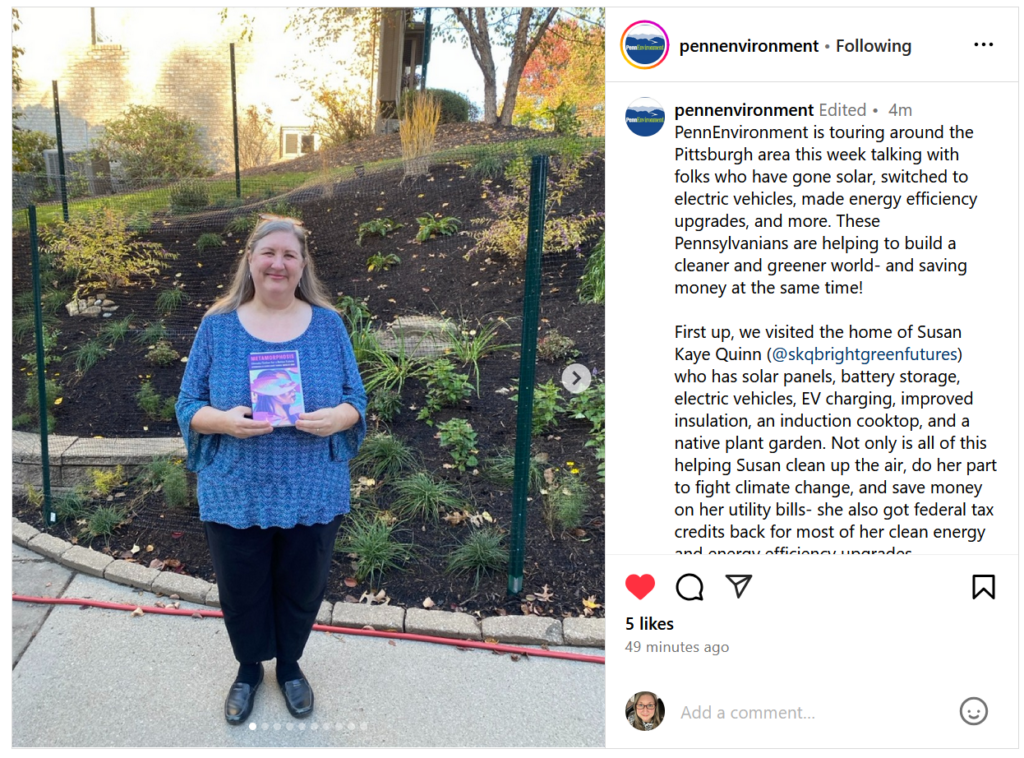
PennEnvironment came to my house and filmed all my clean energy stuff and let me talk about my solarpunk books! Check out their cool video.