
It’s wild to see folks on bluesky wrestling with the knowledge that they’re unlikely to outlive this dark turn in America. And what that means for them, for their kids. I say “wild” because the responses are predictably dark (nihilistic if not suicidal) or tone-deaf (“You gotta keep fighting!”) but so few have walked through what this really means and what to really do about it.
I’ve been grappling with this for years (knowing climate impacts are coming for our entire way of life and it would undo everything, and far sooner than people think), so I’ve worked through a lot of this, and yet the election meant we were accelerating all that, in the worst possible way. That America had chosen this and while we can and must fight it every step, the way you do that now is different. It’s not like I’ve got all the solutions but I’ve got some road-tested ideas and I forget that people are out here still in the very early stages of realizing what all this means.
In some ways, I think the climate deniers were the first to take climate change seriously—it’s just that their response was Oh, hell no, we’re not doing that here! They rejected the very idea that we’re changing the climate of the entire planet with our extraction and pollution because they instantly got what that would mean: an existential threat to the status quo from which they benefit so much. They reject it instantly, strongly, even violently. This is not something you do when you don’t think the threat is real. Meanwhile, folks who actually believe in climate change, who aren’t in denial (at least not that kind), and even those of us actively working in the climate fight… we non-deniers struggle to actually engage with the enormity of what it means to destroy the biosphere you depend upon for life. What does that mean for how you live your life? Raise your children? Do you even have children? Especially when your options are very tightly controlled, that’s how the system self-perpetuates: we all still live inside a system that is destroying itself.
This is not a thing that’s easy to grapple with, and our rhetorical and practical tools are pretty shitty, so I don’t blame folks for defaulting to narratives that look like despair or blind optimism. In context, the deniers are opting into a well-worn narrative as well: work to preserve as much of their current reality as possible, by whatever violence necessary (to other people, even ironically to themselves), right up to the end of their lives—it’s not a good response, but it is one that America is enacting to our collective horror right now.
We obviously need a better response than to speedrun to the end (at least the end of the individual lives of people making that choice)… but we are severely lacking in narratives that are up to that challenge.
There are few voices that are meaningfully speaking to this, but Rebecca Solnit is one of them.
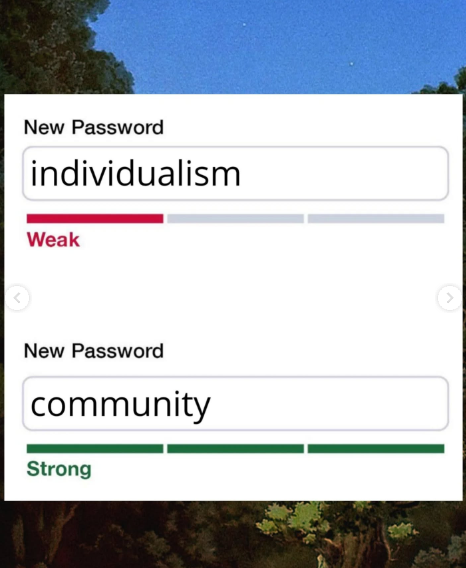
I keep coming back to her and it’s a good thing I’m reading her new work right now, on this Sue Walks the Earth roadtrip across two massive countries (the US and Canada). Today, I’m traversing the beauty of the Canadian Rockies and heading into the oil-state of Alberta right in time (unfortunately) to get caught in the Stampede (this trip is so full of metaphors, it’s almost comical). As I drive, the House will try to decide if it wants to kill America quick or perhaps more slowly. As I huddle in a hotel in Canada, avoiding the crowds, the US will stare down another 4th of July in the land of the “free”. My plans include visiting a bird sanctuary and a Farmers & Makers market, and that too is a metaphor: even as the dominant culture ignores the wildfires burning nearby due to all the oil they’re extracting from the ground underneath them to finance the giant party they’re having, there are still people in that same space trying to protect the fragile beauty of life, still making and growing and baking and singing, still creating things, not least of which is community.
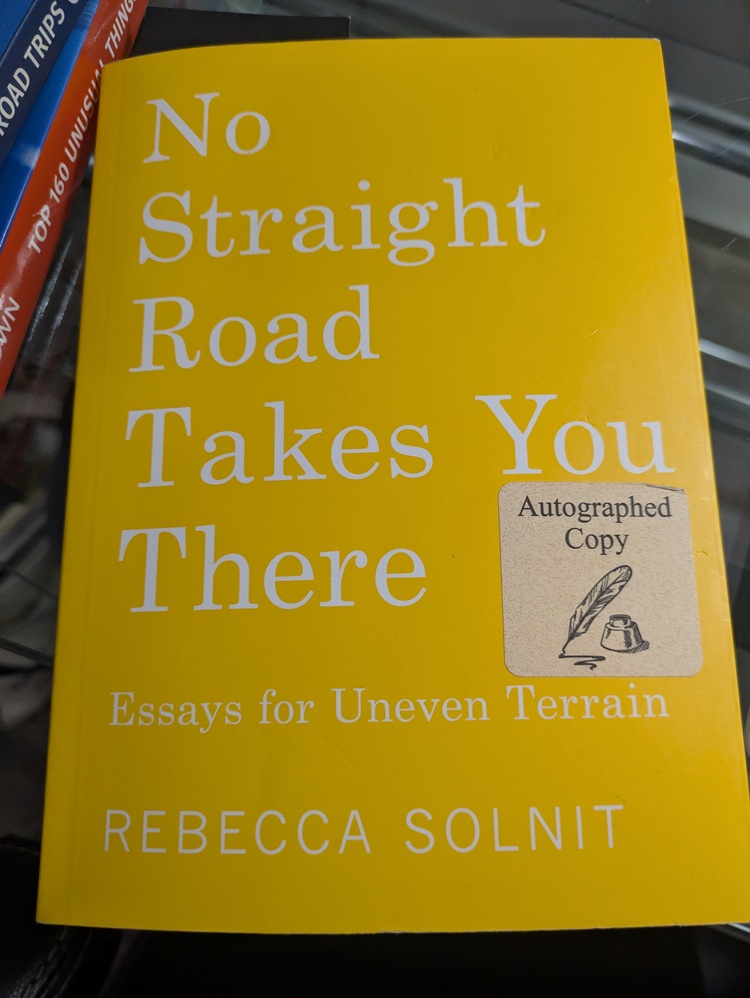
I’m working though Solnit’s latest release, No Straight Road Takes You There: Essays for Uneven Terrain, as a devotional on this trip, but there are two resonant thoughts she returns to, again and again in her works, deepening and broadening them as she does. I think it’s her life work, this task of interrogating these two ideas (and I think she would agree, but she’s the authority on that, as we all are in our own lives):
- that the future is unknowable and we are here to create it
- that the fight for a better world is deeply entwined with knowing what we want that world to be
Society is an invention of humanity and as such, we can invent a new one (Le Guin would agree). We choose certainty (of despair or even “everything will work out!!”) because it is easier, or perhaps bearable is a better word. But there is no certainty, there never has been, and this is the least certain time in my sixty years on the planet. And no, I won’t live to see the end of the things begun here, but that’s less important than making sure I continue the work of creation, of inventing the new world, the one that is better, for me as long as I’m still here, for my children and everyone’s children after me, for the entire biosphere of which we are part.
That work looks like strengthening the bonds between people in my network—the bond of them to me but by extension to each other, whether they realize that at first or not. The work, for me, looks like imagining better conceptual models than nihilism and blind “keep fighting!!” boosterism. We need better tools than that. And it involves being in the world—the real one as well as the also-real online one—so I can understand the struggles and help people weather the hard times while they do their part to build better ones.
So today, because I see people engaging in the hard work of understanding the depth of trouble we’re in, I offer Solnit’s words to help:
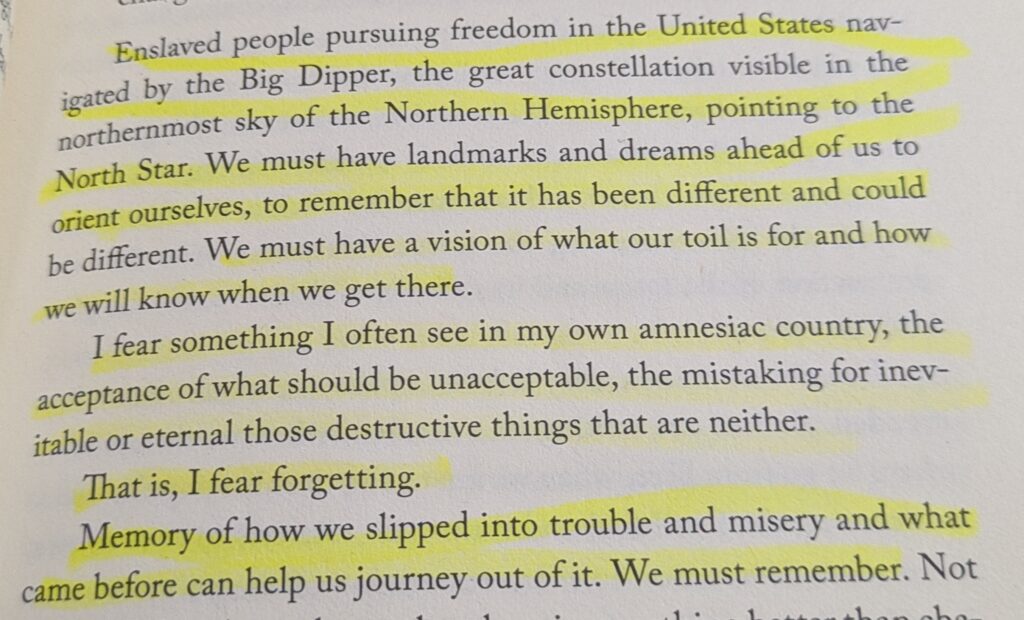
The fight for a better world will outlast all of us. That is the eternal thing, the ever-lasting struggle. The uncertainty and unknowability of the future is a curse for a people who want happy endings, but it’s a gift to those engaged in the struggle. Because the possibility of better remains, always, because it is we who will make it so. We who understand our own agency in the world, which varies wildly and has real limits, but it still exists: we can step into the yawning gap between what we have now and what is possible and be part of creating the world we want to see.
It is a grand and terrible adventure to live in these “interesting times.” But this adventure of a roadtrip across two countries, committing accidental diplomacy and intentional connection building, reminds me how different our world looks in different places with different people: some of that is the natural world, but we are part of that. We are simply the part that has big brains and imagination and is capable of choosing to organize ourselves in different ways, some with much better outcomes than others.
And if we can choose these differences, even inside a system that’s currently destroying itself, then we have more power to create a better world than we imagine.
We will do this together, whether we like it or not. That’s the nature of the struggle.
Let’s help each other engage in the fight.
Your emails are helping me wake to reality. Thanks