Does my gender affect my writing?
I think the answer has to be yes, with the qualifier that all different aspects of who I am influence my writing. I’m a mother, an engineer, and a rabid fan of Star Wars and Battlestar Galactica. Does this impact my writing? Yes. I’m a wife, an elected official, and a sucker for deep philosophical issues. Does this impact my writing? Yes.
This great article in Writer’s Digest goes one step further and talks about how men and women write differently. Women tend to write softer, more soothing prose, and [approach stories] from an emotional standpoint. Men tend to write more action, more muscular prose, and tackle stories that “get the job done.”
[I struggled (there it is again) to come up with a softer verb (approach) for this sentence, whereas tackle just rolled off my fingertips. I think I write like a boy.]
These are of course generalizations and don’t apply to every male and female writer.
But we also write what we like to read, so if you want to appeal to both male and female readers, it’s good to understand the differences and apply them critically to your work. I also think understanding this issue is important to writing realistic male and female characters.

One thing I noticed about The Hunger Games was that while Katniss was a girl, she thought and acted like a boy. This is completely believable because her family was dependent on her to “get the job done,” and that facet of her character is part of what allowed her to be the hero(ine) of the story. Part of what made her “think like a boy” was that she rarely considered (at least directly) her feelings about an issue, but rather described the consequences.
An example* of this is when soft-hearted Peeta (a boy) mocks her inability to recognize her own feelings. After Katniss relays a story of conniving to acquire a goat for her younger sister, who adores animals and whose life she saved by volunteering for The Games, he says, “I can see why that day made you happy.” She replies, “Well, I knew that goat would be a little gold mine.” He drily responds, “Yes, of course I was referring to that, not the lasting joy you gave the sister you love so much you took her place in the reaping.” I think this austerity, or perhaps lack of awareness, of feelings (and a whole lot of flying arrows and mayhem) made the story attractive to male readers as well as female readers.

This doesn’t mean that male characters can’t feel plenty of emotion. I like the way Holly Black portrays Cassel, the teen male lead character in White Cat, as having plenty of emotions, but describing them as consequences. When Cassel is stuck on a roof, in danger of slipping and falling off, he doesn’t think this scares the heck out of me or I’ve never been so scared in my life. He thinks, I need to find a way down, preferably one that doesn’t involve dying, while the shaking in his hands makes it tough to keep his grip. You feel the emotion, but it’s action focused, giving it appeal for both boys and girls. This is also simply good SHOW not TELL storytelling.
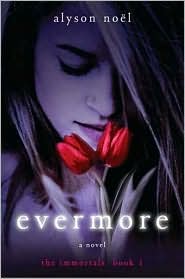
Evermore is an example of the extreme opposite of this – not only do we know the thoughts of the lead female protagonist, but because she’s psychic, we know the thoughts of everyone around her as well. This leads to a lot of phrases like touch is too revealing, too exhausting and everything was pain, and misery, and stinging wet hurt on my forehead. Even if male readers made it past the cover (unlikely) they wouldn’t last through the first chapter. However, gauging by the popularity of Alyson Noel’s books, female readers are slurping it up.
(it’s important to note the covers here as well – although White Cat has a boy on the cover, he’s fully clothed – down to gloves, which are important in the story – and he’s holding a cat. That’s a cover that both boys and girls can carry. Likewise with Hunger Games, a truly gender-neutral cover. The Evermore cover targets its female audience with a female face and flowers.)
The above examples are taken from young adult lit, mainly because all the breakout middle grade books are written in a way that appeals to both sexes (Harry Potter, Lemony Snicket), or are slightly more boy-centric in their writing style (Artemis Fowl, Leviathan). I’ve heard publishers say that girls will read boy-lit but boys will not read girl-lit, but I think this only happens in the extremes of these categories. And girls are as unlikely to enjoy extreme-boy-lit, as boys are to read extreme-girl-lit.
There’s nothing wrong with writing stories that speak directly to the heart of a boy or girl (or man or woman). And stories that target only one gender can get away with using language that only appeals to that gender. But I would love to see more stories for children that appeal to and are accessible to both genders. Stories that have action, but aren’t a barren landscape devoid of emotion. Stories that speak to our hearts, but doesn’t mire us in a lot of navel-gazing introspection. And stories that use language in a way that doesn’t exclude half the children of the world.
The first step is understanding how writing is affected by gender; the second step is intentionally using it in your work as a writer.
Do you think your gender affects your writing? And if so, how?
*I remembered this scene and used the search function on my Nook to find it again. Which kinda rocked.
I think so. I have to write from the POV of both male and female so I guess I have to tap into both but I try to make it as real as possible for my readers. How, not sure.
CD
Interesting post, Susan! I think my gender definitely affects my writing. I usually write from a girl's POV, and I'm always concerned about the emotions my MC experiences (as well as what the reader might experience). My own daughter reads a lot of books with male MC, because those are the ones with the fast paced action and adventure.
@Clarissa How is definitely the trick, and it's not easy. Still working on it myself. 🙂
@Andrea I was the same as your daughter when I was a teen, looking for adventure books, rather than worrying about male/female MC. Good for her!
This is a fascinating series of posts. You can really see the difference in male-female approach in movies where women flock to character-driven films, and men, teenage boys in particular, usually prefer action.
I love the examples you've given here, especially that one from White Cat.
And your last sentence gave me the first reason to buy an electronic reader. I haven't been interested since I love the sensation and experience of reading paper books and I have an aversion to more electronic waste in the environment, but searching through a book for a passage can be daunting. Hmmmm, now I want one of those, darn it.
As for the question, yes, I do have to pay attention, especially in male dialogue, to not let my voice creep in.
"And girls are as unlikely to enjoy extreme-boy-lit, as boys are to read extreme-girl-lit."
I think you're right with this, though I'd be hard-pressed to think of any extreme boy lit.
I know for me action and adventure come easy. But I often feel like I'm just tacking emotions onto the story because I have some idea that they're necessary. Sometimes I even feel like I'm just emulating emotions I've seen or read about in other books.
I mean, I know it's not that bad, but it sure feels that way sometimes 🙂
@Tricia Permit me a moment to celebrate a possible e-book convert (*glee*). Ok, I'm done. 🙂 Dialogue is difficult (for me, at least) and I tend to go spare on it. But first and foremost I think of the dialogue being true to the character, not the gender. But I think I need to start giving more conscious thought, as you do, to whether this is something a boy (or girl) would say as well.
@Adam Extreme boy lit: military SF, gross-out books like this , and used to be hard SF of any kind (because it was fairly misogynistic; not so much anymore) – not that there aren't girls/women who will read that, just not many.
And I think getting the emotions right in a story is actually quite difficult, with women writers having no corner on that market. I've read several (published) books where the emotions felt uneven and unrealistic. It's kinda funny that you say you "feel" you are emulating emotions, but I do believe in the saying "no tears in the writer, no tears in the reader" (apologies to Robert Frost). If YOU feel it, there's no guarantee your writers will, but it's a start.
I've always thought my work very feminine, but I don't like reading (or writing) pages of interior monologue and excessive navel gazing. I like an active plot with plenty of exterior conflict layered over internal conflict. The men in my crit group seem to find my work palatable, so I guess I've struck some kind of balance (or so I hope).
I really enjoyed this post. You used great examples and I'd never really considered it that way before – how the gender difference affects the way the story is told. The emotional key to it. Very interesting and worthy of more consideration.
@Laurel Getting feedback from the opposite sex is an excellent way to gauge the "real-ness" of your characters, as well as the appeal. Good for you!
@Lisa I know, this has got all my gears grinding too! 🙂
If I could only get published, I think I would make it my personal goal to put adventure books for both genders out there. And especially girl MC books that boys would read. Then again… maybe that's the reason my books aren't getting published! (Ha, ha.)
Have a wonderful week, Sue!
Interesting thoughts, Sue. I definitely write from a female perspective in terms of emphasizing character emotion, but I'm a jock at heart so I like the action/adventure too. I think that's why I'm drawn to the genre romantic suspense. Perhaps the romance is for the gals and the suspense is for the guys.
@Jackee I vote for you to get published!! 🙂
@Jennifer Thanks for stopping by! I still need to read your book (it's on my list), but I think you are right about the suspense making the romance more interesting (for the ladies too)!
II always find it so interesting when I go back and reread my scenes writing from a MMC's POV. The word choices, the tone, everything is different when it's a guy versus a girl. Haven't written from a boy's POV yet, but that'll happen soon. It's so important to be true to your characters and to let their voice shine through.
I guess it's not a good sign that I find this topic uncomfortable – I don't want to think my gender unduly influences my writing, but when switching back and forth from my novel with the 14 year old male protagonist to my novel with the 17 year old female protagonist, I find myself trying to add more action to the former and less crying to the latter. I suppose that's a gendered thing!
Love it 🙂 There really is a specific way to write boys vs. girls. One thing I'm often critiquing is how females-writing-males often use a lot of detailed description, such as "I love New York, with its buildings scraping the sky and the lush green of Central Park."
That's a very feminine description, because females are naturally inclined toward noting detail. It has color, scenery, and overly descriptive language. Males, on the other hand, are more focused on action and the overall picture. So a more "male" version of that sentence would be something like, "I love New York, where I have to weave my bike through deadly traffic just to get a slice of the best pizza in the world."
Which, as you mentioned, isn't to say that males never describe a scene visually and females never think in terms of action. Just that certain styles are more gendered.
Great stuff!
@Nicole Exactly! Your character should drive all the small nuances of voice and dialogue and word choice.
@Deniz I think it's hard to switch back and forth with POV's unless you have them firmly in your mind. Then again, your "voice" should be consistent throughout, so maybe you're just honing in on that? Either way, just being aware of it, I think helps.
@Steph I love your examples! You can hear the male and female voices in them.
No, you're right Susan, I could never be writing these books at the same time! Turns out I can't concentrate on more than one wip at a time…
That said, I'm still keeping that first novel in mind, tweaking it here and there every once in a while.
And, um, all the characters come to play when there's a writers' house party on at the Compuserve Books and Writers Community!
Great insights on a topic I hadn't thought about. it's true though…our gender does change our writing and it is so important to know how to write the opposite gender.
Lyn
W.I.P. It: A Writer's Journey
@Deniz Writer's House Party? Awesome. 🙂
@Lynda Thanks for stopping by! 🙂
I loved the examples you gave from these three books – what a fascinating analysis! You captured Katniss' character perfectly in this example. Haven't read the other two, but the White Cat one looks interesting.
@Margo I think you would like White Cat, plus it's another one (like Hunger Games) where you can learn a lot about craft. BTW, I heard Hunger Games is going to be made into a movie! 🙂
It is it is! And you're all welcome to come by – next party invitations go up 22 September and anyone can play!
@Deniz Stop back and remind me and I'll throw up a link! 🙂
Invites are up! 🙂
http://community.compuserve.com/n/pfx/forum.aspx?folderId=8&listMode=13&nav=messages&webtag=ws-books
And, um, all the characters come to play when there's a writers' house party on at the Compuserve Books and Writers Community!
Thanks Deniz! The House Party sounds cool!
I can't wait for it! 🙂