Today’s books for kids have child protagonists the same age as their readers (or a couple years older – kids like to “read up”).
It wasn’t ever thus.
Fairy tales, the children’s fiction of yore, sometimes featured children, but just as often had adult heroes (and villains). While children’s fiction should by definition be books that appeal to children, today’s books seem limited to stories about children.
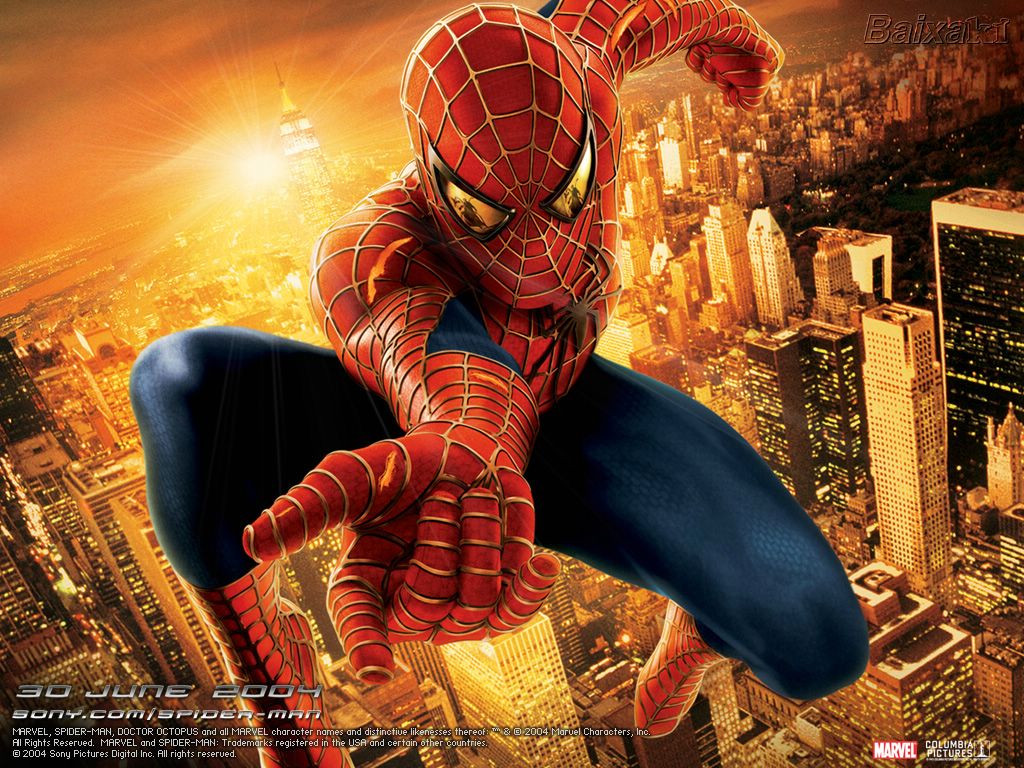
But children are fascinated by Spiderman and Superman and King Arthur and Luke Skywalker, and the last time I checked, none of these characters were children. These stories are written about (supposed) adults, but they are most certainly written for children. But step away from the comic books, TV shows, and movies, and children’s literature is bereft of adult (main) characters. In fact, there’s an unwritten rule that not only must the main protagonist be a child, the child must be the one to solve the story problem.
Thank you, Harry Potter.
Of course there are adult mentors in kidlit (where would Harry be without Dumbledore), but they aren’t allowed to take center stage. They aren’t the heroes of the story, and more often than not, the adults are bumbling, evil, or dead.
Note that none of the above superhero stories originated in the last 30 years. It’s almost as if children are expected to be their own heroes these days, rather than dreaming of growing up to be heroes. There’s some fundamental shift in thinking here, but it has only occurred in literature. The fact that adult heroes live on in comics, movies, and TV leads me to think that children still crave these adult heroes.
So why have they been banished from books?* Especially when kids are obviously interested in more than that?
If you have the answers, please leave them in the comments below. 🙂
*I’m not counting book adaptations of movies and TV
Another fascinating post, Susan. I think one of the powerful things about children as heroes is the reader can imagine not being helpless in the world. Kids so often are at the mercy of adults. And most of these stories are written at a time in life when children are learning how to step into grown-up shoes.
Fairytales and fables were written for all ages, I think. I may be wrong but didn't they grew out of oral traditions in which the tribal or town storyteller both entertains and spins cautionary tales for all?
Superhero stories, too, seem to appeal to a wide age range, and didn't most of them grow out of comic books, not traditional books?
I guess I'm playing devil's advocate here but I thought Luke Skywalker was supposed to be a teenager. Anyway, he was young and lived with his aunt and uncle, dreaming of getting away, when that film series began.
I'm really enjoying thinking about this (even though I just woke up!). One reason for young characters in stories for children and teens is they can relate and adults can also relate because they've all been there, but kids have never been adults. That's not yet in their experience.
So much to think about. I'll be back to read what others have to say. Thanks for a stimulating notion.
@Tricia Thanks for the thoughtful comment! I agree that all kids yearn for the empowerment that is in kid's books today. And I'm not saying that's wrong in any way – I love those stories (both writing and reading them)! I just wonder why there's no room for stories with adult heroes. I think comics were the original kidlit, back when less people saw the importance of writing novels for children. But yu are right that there have always been stories for children (Aesops fables) that have served as instruction. Perhaps now they are primarily entertainment? (In the case of young skywalker, he may be an {older} teen, but there are few stories written today that feature teenagers that are targeted to kids as young as six – in novels, at least – and yet he's an enduring hero. Also: the latest renditions of the Star Wars franchises {Clone Wars} are all about adults)
To be honest, I'd never thought about it until now but you are absolutely right. In fact, so many websites about writing for children practically demand that the heros be the same age as the desired readership. But I think we really NEED some books with adults as heros. Children are growing up too fast and I personally would like my children to get the message that it is not their job to sort out the big problems in life — that is what adults are there for. (Not that I don't want them to be independent thinkers and problem solvers. But I do want them to be KIDS. Let's face it — Harry Potter stopped being a real kid by book three.)
I hope that if you find some worthwhile books with adults as heros, you'll post info about them here.
It's similar to tv and movies where the adults are all idiots in kid movies while the kids are the clever ones who save the day. It's a trend that will shift back once there's a book or movie that turns this on its head and becomes an uber blockbuster.
I love that you wrote "It wasn't ever thus."
@Jenna I think I may have to dive into the past to find adult heroes in books for kids…but that might be a worthy treasure hunt!
@KarenG See, this is why I love blogging. I can write stuff like "ever thus" and no one can stop me! 🙂 And I think you are right – the rules are the rules right up until they are broken!
Jenna, you might try the Ranger's Apprentice series
Karen G, I know what you mean! Why does adult equate idiot in pop culture?
I wonder, too, if this shift in literature isn't a reflection of our society? Families are becoming more splintered and the growing lack of strong father figures is especially troubling.
That said, the poignancy and depth an heroic adult character brings to a story is incredibly power. We as writers should continue to craft these stories even if the market may be running counter to us.
The hero always has a wise mentor for at least part of his/her journey. Let's not deny this generation that same magic.
One of the few places we still see heroic kilit adults is in mentor/protege relationships, where a child is trained up and absorbs the wisdom of a great leader, then carries that learning into his or her own adventures. I've occasionally seen in fanstasy a party made up of heroic adults and protege teens, but it's always the protege who save the day, isn't it?
I guess the real underlying "rule" is that one should always write an active protagonist, not a "Mary Sue" whose problems are solved by others. The more our books are filled with "same age as the reader" characters, the less we'll see adults as heroes. It does sometimes seem like the assumption that kids won't read about older people is simply age-ism. The Hobbit has a 50-year-old protagonist and kids still love it.
@Darby I think fiction always reflects our reality, but also our dreams and aspirations. And I agree about the power of heroic characters. I just wonder if/when those heroes will return to being adults? Or perhaps children participate in adult culture so much, that there is less distinction being made? Only questions, not answers.
@Laurel I think you are right about the mentor relationship being a lasting vestige of the earlier heroic adult. And that's not bad, because especially in MG, kids are still open to learning from adults and that's a good pathway to it. My fear is exactly what you said: that we've become entrenched in some habit-of-mind that doesn't allow us to see a story like The Hobbit now as viable.
I came back to read everyone's great comments and had another thought. Many teens, especially boys, read adult sci-fi/fantasy books, which have adult heroes. So they are reading such books, it's just that they're shelved in a different section of the store.
@Tricia I had another half to this post, about teen boys reading adult books, and decided to save that for another post! And you're exactly right – kids are skipping ahead to the adult stuff anyway (especially teens). But a lot of those adult book have content that's not so hot for (young) teens. Why not allow the adult books to be shelved in the teen section, if they're suitable for teens, just have adult characters?
I'm going to have to run that post at some point, even though it's a bit off topic for this MG blog …
That's a great point. I noticed that adults are missing or dead or uninvolved in YA books lately. Why has this shift taken place, I'm not sure. It's something worth pondering though.
This is a great topic. I'm still thinking about it, but wanted to jump in so I don't miss discussion updates 🙂
@Nicole There's been a couple extended discussions about dead/missing parents, and I ran a post here (about Dads). The upshot is I think it makes for easier plot lines.
@Deniz I have the most amazingly thoughtful commenters, true!
There are still adult protagonists in picture books and easy readers. Some of my favorites are the Good Knight series (Shelley Moore Thomas) and the Mr. Putter and Tabby series (Cynthia Rylant).
But when I took a class on writing for children in college, we were told to let the children be the heros and solve their problems.
Great question, Susan! I know when my kids were younger they only wanted to watch things with kids as main characters. But now at 10 and 7, they're happy to watch movies where adults take center stage just as much as the kids. I don't think kidlit has adult characters like that at all.
@Myrna I didn't think about the younger books, but you're right! Although I'm not sure how old those books are…I know the Miss Piggle Wiggle books are older, from another era.
@Sherrie I think kids are hungry for info about being a grown up – I know I was, growing up.
You know, I hadn't noticed that, but you're so right! I suppose there's something good to be said about kids being their own heroes as an esteem/confidence boost, but, there's much wisdom to be had from an adult hero by virtue of experience, so adult role models should still be encouraged.
I sometimes find child protagonists in literature and film to be a bit too precocious…And in becoming a a teacher, I fully realized how much respect for adult authority has eroded in recent years, to which these "bumbling, evil, or dead" adult characters seems to cater a bit too much. There is no question that we're living in an increasingly child-centric society, so I suppose the lit is falling into place for better or worse…
[sorry, meant "seem," not "seems" :)]
What a revelation! Thank you for pointing this out. Very interesting. Got me thinking about who the hero is in To Kill a Mockingbird (my vote for best all-time American novel) and you are RIGHT, the hero is Atticus. And maybe also Boo Radley. Now I am going to be looking at this in every kidlit book I pick up! And revisiting my own MG novel.
@Ms. Monkey Teachers have my sympathies, having to manage kids in the classroom. Makes watching my three boys seem like a walk in the park! And I think you are right about us being increasingly child-centric – which has positives and negatives to it. I'd like to see more strong adult role models all around!
@Margo I'm not sure that the publishing industry is quite ready to embrace a wave of adult heroes in kidlit just yet. But I do think they are noticing the serious lack of positive adult role models, so that's a start!
Great post, Susan. I don't think adults should be banished as heros. Kids need to learn how to solve a problem, but they should also know that it's okay to ask for help from an adult.
It seems to me showing an adult as a mentor in kidlit is a wonderful way to foster respect and appreciation for both old and young without being didactic.