Here’s where Sue tilts at a windmill and hopes that people don’t think she’s crazy. Like talking-about-herself-in-the-third-person crazy…
Ideas Are Powerful Things
Often what we think is possible limits what actually is possible. A shift in viewpoint can change everything. My thinking about what is possible in publishing started to shift as I watched Hugh Howey’s rise as an indie author. It shifted dramatically when I heard he had landed a print-only contract. But the shift wasn’t complete until I met him and spoke with him about the industry, about his attempts to change things, not for himself, but for other authors to come after him.
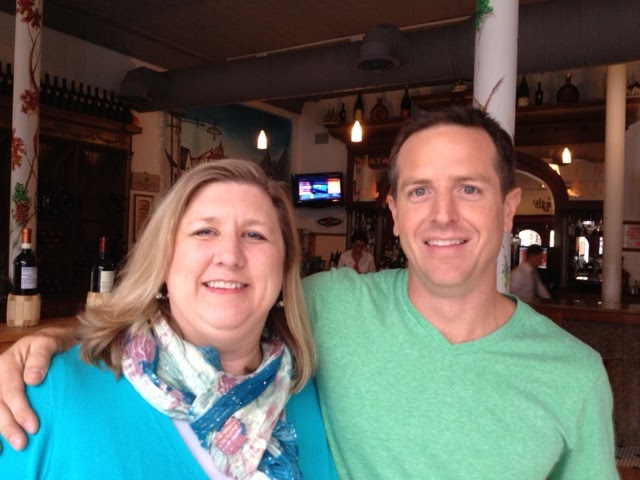
Inspirational people have a way of shifting things. Of getting inside your head and stirring the contents until something new emerges.
The Idea: Bad Contracts Won’t Change Until We Stop Signing Them
Obvious, right? Simple, powerful, yet incredibly difficult to even think about doing.
Wait, You’re Self-Published! Why Are You Talking Contracts?
I am self-published: very happily so. Yet, I recently said “no” to a bad contract. It wasn’t some earth-shaking “big deal” contract, so don’t get excited. I won’t go into the specifics, because there’s really no need. You can’t throw a rock without hitting a bad contract in the publishing world. They’re everywhere. I know more friends who have turned down (or worse signed) bad contracts than I know authors who have signed good ones. In fact, there’s a name for bad contracts: boilerplate. Meaning, decades of publishers and agents having all the power in the agent-author, editor-author relationships has resulted in standard contracts rife with things that are no good for authors.
So, the specifics of my case aren’t important. What’s important is this: the contract I was asked to sign was a disaster. It didn’t even accomplish what the publisher wanted, and no author would sign it, if they knew what it meant. But other authors had signed it. When I attempted to negotiate with the publisher, saying, “Hey, this contract is really kinda messed up. It doesn’t do what I think you want, and it’s horrible on the author end. How about we change it?” the answer was, “We know it’s bad, but we don’t really care. We have lots of authors who’ve already signed this. Please go away.”
I was happy to go away, not least because of the response. But this stuck with me: lots of authors who’ve already signed this.
Know What You’re Signing
I’m convinced that there is no way those authors actually knew what they were signing. Or they were desperate and would sign anything. Whenever you’re signing a contract, you’re tied to that agent/publisher for the duration, like it or not. (I have personal experience on this as well.) Make sure you know what you’re signing! Educate yourself on the perils and pitfalls of contracts. Hire an attorney to look over the contract, if you’re not sure you understand it. If you don’t think you can afford an attorney, get a friend who understands contracts to help. But don’t blindly sign something, trusting the other party to tell you what it “means.” You will be stuck with it, usually literally forever, as one of the worst contract provisions is that it’s for the “length of the copyright”, which is your lifetime plus 70 years – yes, you’re binding your heirs to this contract!
*shudders*
Don’t Be Desperate
There’s never been a better time to say “no” to bad contracts. The self-publishing option means that you do not have to take a bad contract in order to reach readers. And TRUST ME if your work is good enough to attract publisher interest, it’s good enough to find an audience on its own. You don’t have to give away your work to a publisher for your lifetime plus 70 years to reach readers. You don’t have to accept terms that are “non-negotiable” or “boilerplate.” You can say no and walk away, because an as-good and quite possibly better option exists.


“We (he and his agent) both understood from the beginning that it would likely be against my best interests to take the sort of deal that would be offered (by Big 6 NYC publishers), but we also dreamed of a future where publishers and authors had a different sort of relationship… And so we pursued an impossible dream hoping that the strangeness of our demands (for a print-only deal where he kept his digital rights) might pave the way for future demands from other authors.”
This is so true, Sue! I have considered searching for a publisher for my novel-length work, but I keep thinking of my list of "things I won't sign away in a contract." Knowing we can say "no" and still publish our book and be a success is wonderful. 🙂
Great information for thought here. Thanks, Susan!
Fabulous post/thoughts! Smart authors know and explore their options first. 🙂
The change can occur. It will take time and more authors with less desperation.
I had someone look over my contract before singing and I feel much better for it.
Simply one of he best posts I have read for months. I want to email this to every budding author I know.
Excellent point, Susan. We can't expect anything to change unless we do something about it ourselves.
this was a really insightful and mind opening post. Thanks so much for sharing.
Good for you, Susan! These things need saying, for sure.
Someday, you and I will meet, and I'll personally thank you for telling me this. I just have a feeling…