Using Choices and
Crises to Show True Character
Crises to Show True Character
by Becca Puglisi
(see below to win a PDF copy of The Positive Trait Thesaurus: A Writer’s Guide to Character Attributes. )
When I think about some of my favorite protagonists, I can
usually identify a trait that defines each one:
usually identify a trait that defines each one:
Will Hunting: Intelligence
Sam Gamgee: Loyalty
James T. Kirk: Boldness
However…if these characters were made up of
just that one trait, they probably wouldn’t be my favorites because they’d
be paper-thin—more like caricatures than the genuine
article. Real people are complicated and deep, embodying more than one quality.
And so must our characters if they’re going to draw readers in through
authenticity and relatability. By adding more traits, you add dimension, but
you run the risk of drawing a character who’s all over the map and doesn’t
ring true to the audience.
just that one trait, they probably wouldn’t be my favorites because they’d
be paper-thin—more like caricatures than the genuine
article. Real people are complicated and deep, embodying more than one quality.
And so must our characters if they’re going to draw readers in through
authenticity and relatability. By adding more traits, you add dimension, but
you run the risk of drawing a character who’s all over the map and doesn’t
ring true to the audience.
So how do we create multi-dimensional characters who make sense
to readers? For simplicity’s sake, I’d like
to focus today on how to accomplish this in regards to a character’s
positive attributes (although these tips also apply to flaws).
to readers? For simplicity’s sake, I’d like
to focus today on how to accomplish this in regards to a character’s
positive attributes (although these tips also apply to flaws).
First, identify the character’s
positive traits. Though there could be dozens, narrow the list down to
the dominant ones—no more than five or six. Let’s
use our beloved Captain Kirk as an example. Along with boldness, he also
exemplifies loyalty, daring, decisiveness, extroversion, and charm. But trying
to write a hero with so many traits can make for a scattered character with
hard-to-define motivations and emotions.
positive traits. Though there could be dozens, narrow the list down to
the dominant ones—no more than five or six. Let’s
use our beloved Captain Kirk as an example. Along with boldness, he also
exemplifies loyalty, daring, decisiveness, extroversion, and charm. But trying
to write a hero with so many traits can make for a scattered character with
hard-to-define motivations and emotions.
To avoid this, look at your short list of traits and determine
which one is your character’s primary. This is the
attribute that will drive his choices. It is often also tied to his moral and
ethical beliefs, his sense of right, wrong, duty, and worth. Going back to
Captain Kirk, while he clearly owns a number of positive traits, boldness is
the one that most drives him. It determines how he relates to others, responds
to crises, and directly affects his career path and choice of hobbies. It also
serves as a header from which many of his other traits—adventurousness,
extroversion, and decisiveness—stem.
which one is your character’s primary. This is the
attribute that will drive his choices. It is often also tied to his moral and
ethical beliefs, his sense of right, wrong, duty, and worth. Going back to
Captain Kirk, while he clearly owns a number of positive traits, boldness is
the one that most drives him. It determines how he relates to others, responds
to crises, and directly affects his career path and choice of hobbies. It also
serves as a header from which many of his other traits—adventurousness,
extroversion, and decisiveness—stem.
Once you’ve figured out your character’s
primary attribute, focus your efforts on showing that trait to the reader.
Whenever your hero is faced with a choice, that trait should be a factor in
bringing him to a decision. When crises arise, the primary attribute should be
the one that influences him on an internal, subconscious level. Narrowing the
list down to one trait will make it easy for the reader to identify who the
character is. For good or bad, we like to categorize things and put people in
boxes. When readers can say, “Oh, he’s like this,”
they’re able to put their finger on who the character is, and he
becomes accessible. Relatable.
primary attribute, focus your efforts on showing that trait to the reader.
Whenever your hero is faced with a choice, that trait should be a factor in
bringing him to a decision. When crises arise, the primary attribute should be
the one that influences him on an internal, subconscious level. Narrowing the
list down to one trait will make it easy for the reader to identify who the
character is. For good or bad, we like to categorize things and put people in
boxes. When readers can say, “Oh, he’s like this,”
they’re able to put their finger on who the character is, and he
becomes accessible. Relatable.
Then, to add dimension, show those secondary traits, too—only,
not as often. They should offer support, strengthening your character’s
personality without overpowering it. Showing these traits to a lesser degree
will add dimension while ensuring that your character’s
primary trait shines through.
not as often. They should offer support, strengthening your character’s
personality without overpowering it. Showing these traits to a lesser degree
will add dimension while ensuring that your character’s
primary trait shines through.
If you’ve got a multi-flawed character, which
can be a good idea, you can follow these same steps to balance his negative
traits and make sure you’re focusing on the one that truly
drives him.
can be a good idea, you can follow these same steps to balance his negative
traits and make sure you’re focusing on the one that truly
drives him.
What about you? Do you know your character’s
primary and secondary traits? Leave a comment sharing about your unique
protagonist or villain for a chance to win a PDF copy of The Positive Trait
Thesaurus: A Writer’s Guide to Character Attributes.
The giveaway runs through December 6th, after which time I’ll
pick a winner. Best of luck!
primary and secondary traits? Leave a comment sharing about your unique
protagonist or villain for a chance to win a PDF copy of The Positive Trait
Thesaurus: A Writer’s Guide to Character Attributes.
The giveaway runs through December 6th, after which time I’ll
pick a winner. Best of luck!
BIO:
 Becca
BeccaPuglisi is the co-creator of The Bookshelf Muse, an award winning online
resource for writers. She has also authored a number of nonfiction resource
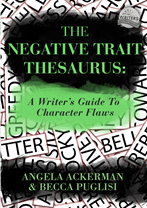
books for writers, including The Emotion Thesaurus: A Writer’s Guide to Character
Emotion; The Positive Trait Thesaurus: A Writer’s Guide to
Character Attributes;
and The Negative Trait Thesaurus: A
Writer’s Guide to Character Flaws.
A member of SCBWI, she leads workshops at regional conferences, teaches
webinars through WANA International,
and can be found online at her Writers Helping Writers website.



Another terrific post. In one of my romantic tales, I have a character whose primary characteristic is a sharp eye for detail, details often missed by other people. An art historian by profession, he often compare life to art. He constantly associates what he sees with the artworks he knows well. His secondary characteristic is one he rarely shows. He's a very sensitive and empathetic man. Because all art is emotion and he feels art acutely, he wears his heart upon his sleeve.
I love observant characters—probably because I'm chronically unobservant myself. Having a character who notices everything can definitely come in handy.
The character in my middle grade is brave and adventurous. His secondary traits are resourceful and entertaining.
Great character traits for a MG character. Entertaining is good for all audiences ;).
Your post here and at Jody Hedlund's are both great. Thank you! My MC is a leader. She's the oldest of three sisters and likes to be in charge. Secondary traits are that she's resourceful and materialistic.
I like that you've got reasons behind your character's traits. This is hugely important, imo, to creating believable characters.
This is a great planning strategy. Identifying my character's main traits was something I had never done until now. Thanks. My character is a young country girl. Her main trait is innocence. She is also proficient with musical instruments and thinks fast.
Hi, Tez! I struggled with this for years, trying to embrace all of the traits my characters embodied. I ended up with scattered characters that weren't easily definable. Learning this lesson has really helped my characters to become more focused and easier for audiences to relate to.
Hi Becca – love your posts here and at Jody Hedlund's; I'm always guaranteed to learn new things, thank you. I'm in the process of learning about my characters and have a ways to go yet before I'm going to truly know them. My main character is intelligent and creative (she's a writer, lol) – but she's also somewhat naive, which tends to get her into difficult situations.
I like the naïve characters. When written well, they have a vulnerability to them that I find endearing and I think often encourages reader empathy. Best of luck with yours!
My MC's is her motherly nature. She's only a teenager, but she's become a second mother for her baby sister since both of them were orphaned by a plague. Her secondary trait would be bravery, which stems from her love for her sister and two friends, because people are capable of doing impossible things for those they love— in many cases, even more than they ever could for themselves. Love fuels the impossible. (:
Interesting! The MC I'm developing for my WIP is also nurturing in a nature. I've never written anyone like this before, so it's definitely a challenge.
Thank you all so much for your comments, and for entering to win a copy of The Positive Trait Thesaurus: A Writer's Guide to Character Attributes. The winner is…Mindy! Mindy, if you could email me at becca.puglisi@yahoo.com, I'll send your PDF copy. If you've already got one, get me the email address of a writing friend you'd like to gift it to and I'll make sure they get their copy. Thanks again, Sue, for letting me visit :).
Great post Becca, and thanks so much for having us here today Susan! 🙂