
a
novella by Adam Quinn (aka Dark Omen)
novella by Adam Quinn (aka Dark Omen)
My son, Adam Quinn, is
fifteen years old and has written two novels, a novella, and is currently
working on his third novel. He seriously puts his mother to shame in the Early
Potential Unlocked category. Today he’s taking his story to his
Freshman English class, to share it with his friends and to talk about being an
author. Proud really doesn’t touch what I feel about this:
more like a privileged awe in being part of shaping this young man’s life. And
eagerness to see what great things he will do in the future with all of his
talents and hard work.
fifteen years old and has written two novels, a novella, and is currently
working on his third novel. He seriously puts his mother to shame in the Early
Potential Unlocked category. Today he’s taking his story to his
Freshman English class, to share it with his friends and to talk about being an
author. Proud really doesn’t touch what I feel about this:
more like a privileged awe in being part of shaping this young man’s life. And
eagerness to see what great things he will do in the future with all of his
talents and hard work.
I asked Adam to do a
brief interview, but first, some of the nuts-and-bolts about publishing your
kid’s works (because I know many of you have talented offspring, and I love
that Adam’s work often inspires other young writers):
brief interview, but first, some of the nuts-and-bolts about publishing your
kid’s works (because I know many of you have talented offspring, and I love
that Adam’s work often inspires other young writers):
Why Publish?
Publishing a young
person’s work gives them the same motivation and pride-in-accomplishment that
anyone experiences when they publish. It gives them a chance to have more than
just their mother and teacher read their work, by making it easily accessible
via free ebook downloads for their friends and relatives. And making a physical
copy of their novel is (shockingly!) cheaper with print-on-demand than going to
the Kinko’s and copying manuscript pages. The bragging rights that grandmas and
teachers have in holding their favorite grandson or student’s work? Not
to be underestimated.
person’s work gives them the same motivation and pride-in-accomplishment that
anyone experiences when they publish. It gives them a chance to have more than
just their mother and teacher read their work, by making it easily accessible
via free ebook downloads for their friends and relatives. And making a physical
copy of their novel is (shockingly!) cheaper with print-on-demand than going to
the Kinko’s and copying manuscript pages. The bragging rights that grandmas and
teachers have in holding their favorite grandson or student’s work? Not
to be underestimated.
These are all the
benefits – what about the drawbacks?
benefits – what about the drawbacks?
The Downsides
Some people worry that
publishing their children’s works will put undue pressure on them and expose
them to the wild and woolly world of nasty reviews and internet crazy people.
Our experience with publishing Adam’s work has been exceedingly positive, but I
think this is largely because of how we approached it. I’m not trying to make
Adam a Junior Stephen King (i.e. my focus is on his educational benefit, not
creating a money-making enterprise). I also took precautions to limit the
distribution of his work, keeping it relatively small (Nook and Smashwords, but
not Kindle) and FREE. Most importantly, I discussed with him the objective for
publishing his work (sharing with family and friends primarily) and the
difference between amateur and professional.
publishing their children’s works will put undue pressure on them and expose
them to the wild and woolly world of nasty reviews and internet crazy people.
Our experience with publishing Adam’s work has been exceedingly positive, but I
think this is largely because of how we approached it. I’m not trying to make
Adam a Junior Stephen King (i.e. my focus is on his educational benefit, not
creating a money-making enterprise). I also took precautions to limit the
distribution of his work, keeping it relatively small (Nook and Smashwords, but
not Kindle) and FREE. Most importantly, I discussed with him the objective for
publishing his work (sharing with family and friends primarily) and the
difference between amateur and professional.
Amateur vs. Professional
Early on, I had a
conversation with Adam about how, as a young author, his writing should be
about growing as a writer, not making it into a business. There may come a day
when he wants to “professionalize” his work – i.e. try to make money
at it – but for now, I’d rather see him stay amateur (which means keeping his
work free and primarily sharing with friends and family). I pointed to Olympic
athletes as examples of how “amateur” doesn’t mean “poor
quality” – and that he should always strive for the highest quality work
he is capable of producing at the time (in everything, including writing). He
edits and copyedits his work (with my help) and strives to improve his craft
with each story. The final product is one we are both proud to share. When he’s
an adult, he’ll have all the experience he needs to decide whether he’s ready
to start selling his stories, or if he wants to continue to be a
“hobbyist” – either way he’ll have had the gift of time to grow in
his writing, along with the appreciation of his family and friends, without the
demands of making it a business.
conversation with Adam about how, as a young author, his writing should be
about growing as a writer, not making it into a business. There may come a day
when he wants to “professionalize” his work – i.e. try to make money
at it – but for now, I’d rather see him stay amateur (which means keeping his
work free and primarily sharing with friends and family). I pointed to Olympic
athletes as examples of how “amateur” doesn’t mean “poor
quality” – and that he should always strive for the highest quality work
he is capable of producing at the time (in everything, including writing). He
edits and copyedits his work (with my help) and strives to improve his craft
with each story. The final product is one we are both proud to share. When he’s
an adult, he’ll have all the experience he needs to decide whether he’s ready
to start selling his stories, or if he wants to continue to be a
“hobbyist” – either way he’ll have had the gift of time to grow in
his writing, along with the appreciation of his family and friends, without the
demands of making it a business.
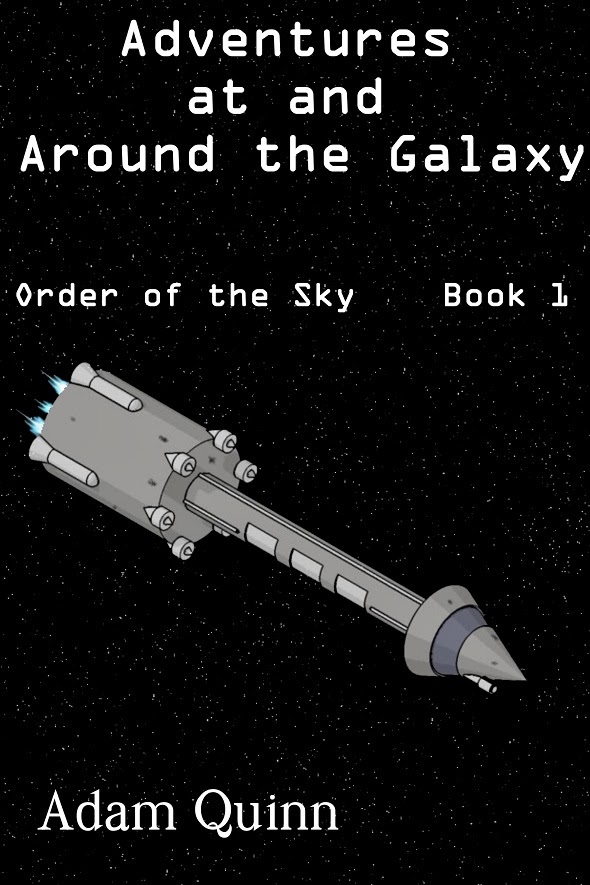
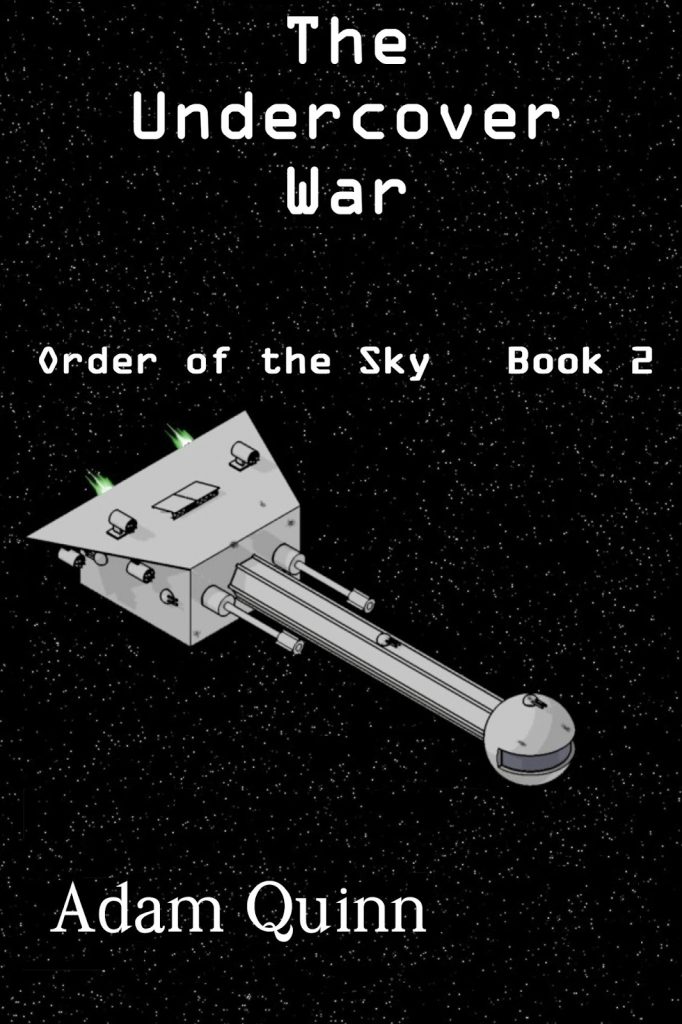

And now for the
interview!
interview!
Me: Adam, you wrote your first novel in sixth
grade, Adventures at and Around the Galaxy, followed 18 months
later by book two in the series, Undercover War. Why did you decide
to write a novella this time? And what is different about this story from your
novels?
grade, Adventures at and Around the Galaxy, followed 18 months
later by book two in the series, Undercover War. Why did you decide
to write a novella this time? And what is different about this story from your
novels?
Adam: Originally, Project
Exibluar was going to be a short story, the idea being that since I
had less time to write during the school year, I could write a larger
percentage of a short story in a given amount of time than a novel, thus
improving the continuity of my writing. This tactic almost failed for two
reasons: (a) high school is a lot of work, especially when you are in four
extracurricular clubs and (b) Project Exibluar evolved into a
22,000-word novella. To address the second question, Project Exibluar is
my first work written in first person, and partly because of this, it is far
more character-driven than the main Order of the Sky trilogy (this novella
takes place between Order of the Sky #’s 1 and 2). It also features a smaller
cast than the main trilogy, and is a young adult book, while the others were
middle grade.
Exibluar was going to be a short story, the idea being that since I
had less time to write during the school year, I could write a larger
percentage of a short story in a given amount of time than a novel, thus
improving the continuity of my writing. This tactic almost failed for two
reasons: (a) high school is a lot of work, especially when you are in four
extracurricular clubs and (b) Project Exibluar evolved into a
22,000-word novella. To address the second question, Project Exibluar is
my first work written in first person, and partly because of this, it is far
more character-driven than the main Order of the Sky trilogy (this novella
takes place between Order of the Sky #’s 1 and 2). It also features a smaller
cast than the main trilogy, and is a young adult book, while the others were
middle grade.
Me: You have plenty of interests outside of
writing – fencing, band, Math Team, Model UN – and you’re a busy Freshman with
lots of demanding classes. How do you make time for writing?
writing – fencing, band, Math Team, Model UN – and you’re a busy Freshman with
lots of demanding classes. How do you make time for writing?
Adam: It’s
rare to see me writing on a school night, and even somewhat uncommon to see me
writing on a two-day weekend. The reason for this is related to the above
question—that writing a book in small, disjointed segments is not generally the
way to go, as I learned while writing (or, more accurately, rewriting the bad
parts of ) Project Exibluar. During long weekends (three to four
days), I almost exclusively write short stories and novellas, while over summer
break I almost exclusively write novels. Winter break and spring break are allocated
to whatever project needs work at the time.
rare to see me writing on a school night, and even somewhat uncommon to see me
writing on a two-day weekend. The reason for this is related to the above
question—that writing a book in small, disjointed segments is not generally the
way to go, as I learned while writing (or, more accurately, rewriting the bad
parts of ) Project Exibluar. During long weekends (three to four
days), I almost exclusively write short stories and novellas, while over summer
break I almost exclusively write novels. Winter break and spring break are allocated
to whatever project needs work at the time.
Me: You’ve always impressed me with your
constant striving for learning new ways to tell stories – you took my classes
at the library on story structure, studied Blake Snyder’s Beat Sheet, and seek
out critiques (primarily from me, but also other students and teachers). What
advice do you have for young writers like yourself in learning how to improve
their writing craft or just getting started with that first story?
constant striving for learning new ways to tell stories – you took my classes
at the library on story structure, studied Blake Snyder’s Beat Sheet, and seek
out critiques (primarily from me, but also other students and teachers). What
advice do you have for young writers like yourself in learning how to improve
their writing craft or just getting started with that first story?
Adam: My
advice is to be careful about taking advice. While there are a lot of people
who want to help you grow as a writer, there are a few who don’t know what they
are talking about or… *checks if any vanity publishers are listening*
…intentionally mislead you. Not to scare anyone away from seeking out advice,
which is an excellent thing to do, but if someone tries to tell you how to
write and they (a) have no qualifications to dispense advice, (b) stand to make
a profit, or (c) say things that are detrimental, not helpful, then I would consider
showing them the door. Via forklift.
advice is to be careful about taking advice. While there are a lot of people
who want to help you grow as a writer, there are a few who don’t know what they
are talking about or… *checks if any vanity publishers are listening*
…intentionally mislead you. Not to scare anyone away from seeking out advice,
which is an excellent thing to do, but if someone tries to tell you how to
write and they (a) have no qualifications to dispense advice, (b) stand to make
a profit, or (c) say things that are detrimental, not helpful, then I would consider
showing them the door. Via forklift.
Adam’s Subconscious: Should we put a picture of our cat in this
post? We did that on our last guest post on this blog.
post? We did that on our last guest post on this blog.
Me: How did you get on my blog?
Adam’s Subconscious: Forklift.
Adam: No cat pictures. But you can take a look
at my release post on my own blog or obtain
any of my books, including Project Exibluar at:
http://susankayequinn.com/books/
at my release post on my own blog or obtain
any of my books, including Project Exibluar at:
http://susankayequinn.com/books/
Adam’s Subconscious: Please…?
Adam: Fine…
Adam’s Subconscious:

***
Adam’s books are middle grade and young adult, filled with action and adventure and absolutely, positively zero romance (in spite of his mother’s attempts to insist there are subtextual relationships between some of the characters). They have great, high-brow humor, lots of swordplay, and are safe for kids ages 10+. In particular, I love the strong female characters that populate Adam’s book universe, especially in Project Exibluar. I hope you (and your kids) will enjoy his stories!
Wow, Adam! You definitely have it going on. Good for you! So inspiring to other young writers. I'm sure success is an element of life you will run into often. Best of luck!
Sue – thanks for sharing your views on publishing your child's work. It's something I've often thought about.
Thank you! I sure hope I have some success left, as I have more (and bigger) projects coming down the pipeline.
It is always wonderful to read of young authors taking the time to work, rework and work some more on creative outlets, such as writing. Thanks, Sue and Adam, for sharing…oh and for the cat on the forklift too lol!
I look forward to reading the novella, Adam. It is delightful that you have the perserverence to start a writing career so early in life. I know you will achieve a lot in this arena, given your early start. Keep up the great work.
Congrats!
Via forklift. *snort*
I thought Adam's advice to not always take advice was just so spot on. It took me a couple years to recover from the revision I made on an early book because of the advice given by others. I never really got the book back into the voice or sincerity that it had before . . . but I did learn a valuable lesson. A lesson Adam's already learned. #GoAdam
Congrats all around, Quinn People!