I’m a huge advocate for solar and will make a separate post for that (SOLAR: How to Get Started and Why You Should), but whether you have solar or not, having backup power is going to be more important going forward (especially with a climate denier in the White House not only eager to make the climate crisis worse, he’s promised to roll back any clean energy tax credits he can).
The climate crisis is going to get worse and planning for weather-induced outages is just smart.
GOOD NEWS: there are a lot more options available now, across a range of budgets and power needs.
This stuff can be confusing, and it’s one of my obsessive hobbies to figure out how the power works (I wrote a whole solarpunk power-grid mystery series). I’ve also got that Ph.D. in engineering and my own solar and home backup power, just to let you know that I’m fairly well versed in the tech.
That doesn’t make me an expert by any means, so this post is just me trying to demystify some of the options and give you some info to think through what’s coming with the climate crisis and comparison shop some options. Practical holiday gifts are a great choice in times of uncertainty.
General Thoughts On Power and Outages
It helps to know how much energy you actually use. Most people really have no idea. So here are some basic facts to get you oriented:
- kWh (kilowatt hours) is a measure of energy: my home backup battery holds 13 kWh while my Hyundai Ioniq 6 EV battery holds 77 kWh. The average American household will use 15 – 50 kWh in a day, and most of that goes to heating/cooling.
- You need electricity even if you have gas heating: a gas furnace/boiler still uses electricity. If you have an outage, you’re going to ration heating/cooling because those are your biggest energy users, but having a gas furnace doesn’t help if you can’t turn it on. Also: a space heater uses a ton of electricity compared to a heat pump, so don’t assume space heating is the best option. You’ll have to evaluate your situation to see what’s best, but know that heating/cooling are big energy users.
- Saving the refrigerator: most people worry about losing the food in their refrig/freezer in an outage, and this can be costly. If you keep the door closed, most refrigerators will maintain temperature for ~12 hours. To keep them going, you need about 1.5 kWh of energy per 24 hours.
- Phones/Computers/Internet: these don’t use a lot of power, which means even a small backup battery can keep you connected, which can be super important. If possible, you want something you can plug your internet router into. Even if the power is down locally, often the internet is still up, and you won’t burn through your phone data charges if you’ve still got Wifi.
- Lights: generally not the biggest concern in an outage, but if you’ve replaced your bulbs with LEDs, you’ll use a lot less energy keeping the lights on. You can also get rechargeable “candles” and lanterns for emergency lighting.
- Cooking: being able to run the microwave is a blessing in a power outage—but it draws a significant amount of power for a short time, as do single-burner induction cookplates (another good option) and electric kettles. You’ll need a battery sized for these if you want that option. Many folks figure they’ll use their gas cooktop or a camping stove, and that’s also an option (although less eco-friendly and not great to use indoors when you can’t run an exhaust fan—the problem with fossil fuels relentlessly is the pollution and you don’t want it in your house with your family).
Whole House Backup
I have a whole-house backup battery (Tesla, 13kWh, integrated with my rooftop solar—I only got Tesla because supply chains at the time meant it was the only one available; fuck Elon Musk). My home battery automatically switches over in an outage. When an outage occurs, I go switch off everything I don’t need, and that 13kWh will last me about 24 hours, unless it’s super cold and I need to do a lot of heating. I have a heat pump with backup gas furnace, so I switch to the gas during the outage (which still needs electricity to run the fan, but it will use less than the heat pump). I wish I could tap my 77 kWh EV battery during an outage, and my Ioniq 6 does have V2L (vehicle-to-load, which means I can plug an extension cord into it for power), but I don’t currently have that integrated into the house battery (UPDATE: my furnace is now rewired so I could literally run an extension cord from my EV to my furnace to run the furnace motor/fan during a power outage, in the event the heat/cold was extreme; with that 77 kWh EV battery as a backup, especially if I have solar during the day, I can run indefinitely even in the worst cold snap; if you want this option, it’s possible, but requires some minor electrical work).
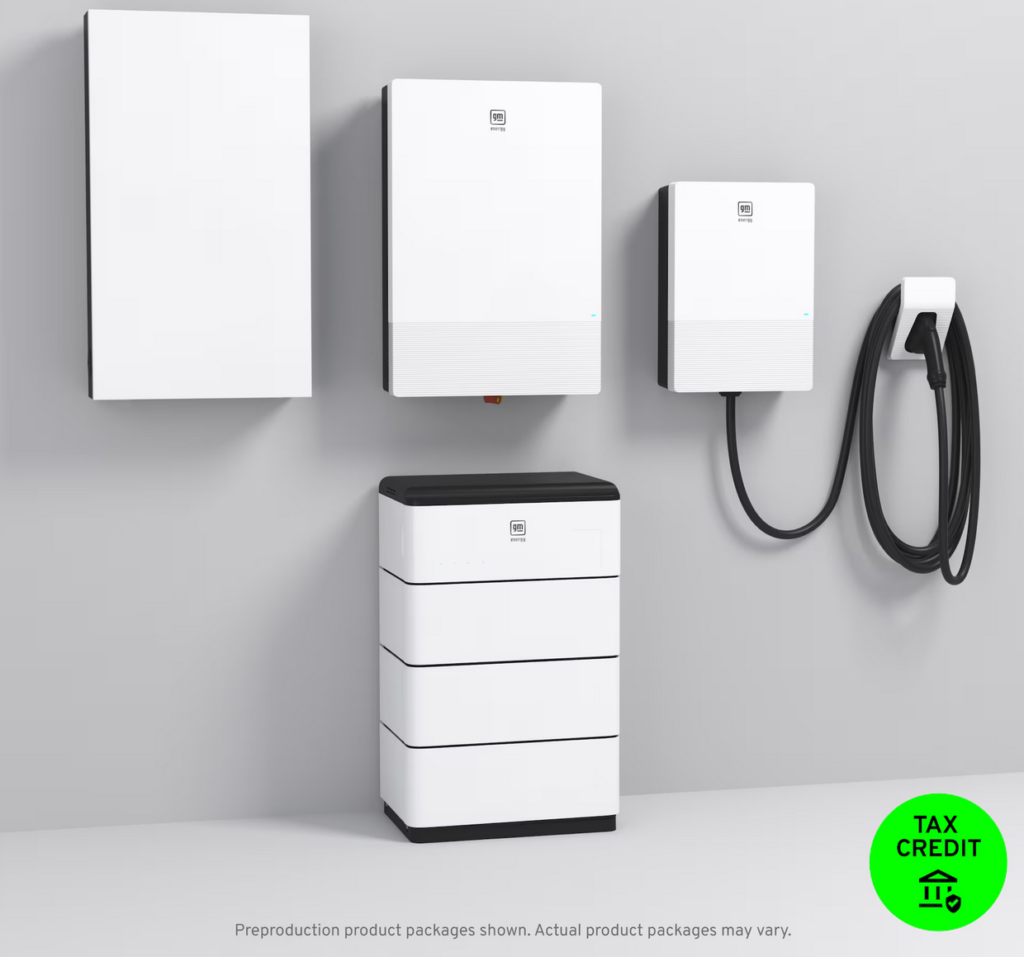
However, GM has a new home backup battery that does precisely this: allows you to plug your EV into the home battery for extended outages. If I were getting a home backup battery now, I would definitely look into the GM Home Energy System: it has a V2H (vehicle-to-home) kit which allows you to plug GM EVs directly into your house. The GM system has backup storage of 10kWh (expandable up to 35 kWh) and costs ~$9-$13k (they periodically run sales so look for those)—which is substantially cheaper with more features than the Tesla battery was 2 years ago. Prices keep falling on solar & batteries.
Jackery also has a new home-backup battery system, but let’s talk about their smaller systems first.
“Generator” Type Backup Power
Most people think of a “backup generator” as something that burns gas, but a “solar generator” (battery + small portable solar panel) is a very viable option, and I was surprised to see Jackery had expanded their line to include everything from tiny portables all the way up to a new “home battery” option comparable to the GM home backup battery! Jackery also has killer deals periodically (including through Costco) so watch for those — I don’t have any affiliate links and I’m sure there are other comparable brands out there, I’m just using Jackery examples because I have one and I can vouch for them being reliable and holding charge really well.
Isn’t a Gas Generator Better for Emergencies?
I mean, sure, if you’ve got nothing else. But gas runs out, including across an entire state in an emergency, it doesn’t automatically renew the next day (like solar), plus you have to worry about exhaust fumes gassing your family, so the generator has to be outside, and it’s loud, and of course, it’s just making the climate crisis worse.
SIDEBAR: It was very instructive to hear my friend was afraid to evacuate with her gas car ahead of the hurricane because she might get stuck in the traffic jam and run out of gas, and the gas stations were already out of fuel. With an EV, that worry goes away: EVs don’t burn electricity unless they’re moving, plus they’re more efficient. You might still sit in the evacuation traffic, but you won’t have to worry about running out of juice while getting away from the storm. A lot of the “obvious” complaints about solar, EVs, and backup batteries, just don’t hold up in real-life situations. (This great video is a long but excellent explainer on all the misinformation vs. the reality about solar, EVs, and batteries.) Gas is something we’re used to but solar/electric/battery technology is superior in a ton of ways, especially in terms of reliability and not having to depend on the increasingly precarious grid/gas infrastructure in the climate crisis. But I digress…
UPSHOT: Battery backups are the clean-energy solution that (with solar) recharges automatically next time the sun comes out, which means it covers a wide range of emergency situations.
How much battery you need and whether you want the portable solar panels depends on what you’re trying to provide backup power for.
SMALLEST: Power Bricks
Most people are familiar with power bricks: they can cost less than $50 and are great for on-the-go phone recharging. Those are cheap and even have eco-friendly tiny power banks, solar-powered phone bricks with flashlights, and a whole range of options and prices, so most folks should be able to find something that works for them.
DOWNSIDES: These are great for a few phone charges but you (generally) can’t recharge your laptop or router—it just doesn’t have enough power and/or isn’t configured for that 120V (regular outlet) charging. I’ve also found they’re not great for backup power because they don’t hold their power for very long. The Jackery systems I’ll talk about below will hold charge for literally years, much like the AA batteries people are familiar with. My experience with power bricks is that I’ll put them in a drawer, forget about them, and when I need them, they need to be recharged again. Solar-powered bricks sound great in theory but make sure they can also charge from an outlet: the size of the solar is so small that it takes a long time to recharge the brick. However, if you store your power brick where it can get some sun, this actually is a great way to make sure it’s always charged when you need it.
Even with the drawbacks of this smallest of backup power options, it’s far better than having nothing—being able to use your phone in an emergency is critical—and it’s affordable for most folks.
SMALL: Portable Backup Power
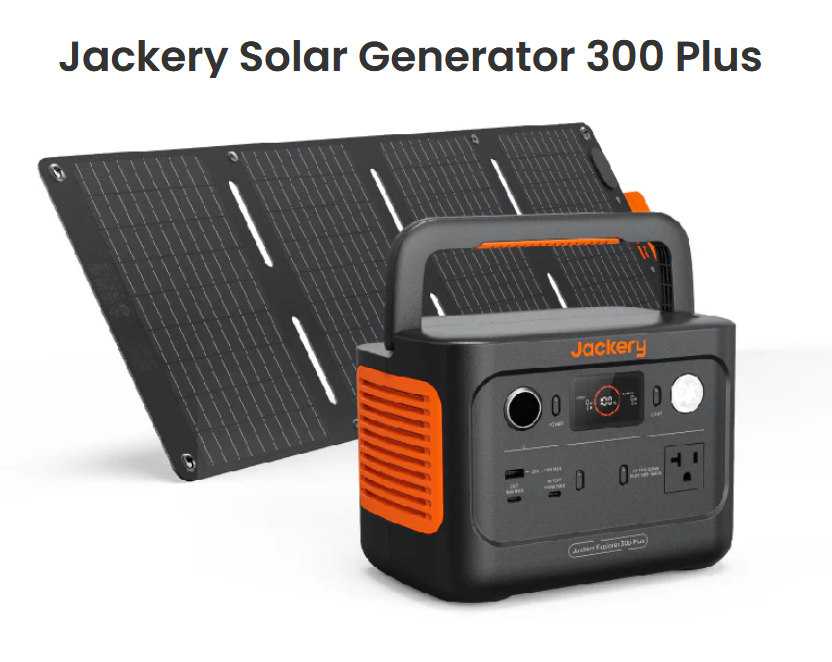
For as little as $280, you can get a small, portable backup power source—charge it up from a normal outlet then deploy the portable solar if you have an extended outage. This is Jackery’s smallest solar generator: 288 Wh (0.288 kWh) which is enough to charge your phone a dozen times and a laptop a couple times (but not anything like a fridge or microwave, maybe a small kettle). The solar panels will recharge the battery in about 9 hours, so if you’re in a multi-day outage but you want to keep your comms going (phone, laptop, internet cable box), this is basically a large power brick that recharges itself. You wouldn’t even need the solar panels in a short outage. I have one of these, an older model before they had the solar add-on, and I’ve used it during a couple short outages plus some outdoor excursions. Works great, holds power forever, good for on-the-go power (camping, etc) as well. If you live in an apartment with not a lot of space but you want some backup power, this could be ideal for you.
MEDIUM: Power Brick Scaled Up + Solar
Jackery has a wide range of models, some meant for travel/camping, some even have solar panels you can mount on top of your car! But for home backup purposes, the main thing you’d want in a medium-sized backup battery is the ability to keep a large appliance like your refrigerator going (in addition to your comms—phone, laptop, internet). Plus you’d want it to recharge from the solar within a day, giving you the option to keep going in an extended outage (or share with your neighbors, resilience is a community-level thing, not just you on your own, as my friends outside Asheville can attest).

For about $900-$1500, you can get a range of medium-sized Jackery options that I’d say were reasonable for powering a refrigerator (and maybe your microwave too). Check the specs to make sure the power output matches your fridge, but remember that refrigerators cycle on/off and use about 1.5 kWh of energy per 24 hours. The Jackery 1000 Plus is 1264 Wh or 1.264 kWh, so it won’t get you through a full day of powering the fridge, but with two 100W solar panels recharging it in about 6 hours, that’s not a problem. It’s not cheap but it’s a solid backup option if you’re mostly interested in keeping the fridge going or if you have some important medical equipment (like a CPAP machine) in addition to all your comms (phone, computer, Wifi) that you want to keep charged. Or you just want the added reassurance of additional power. Being able to run an induction cookplate or microwave oven so you can keep eating warm food while all the craziness is going on makes dealing with stuff easier. Again, I can’t overstate how radical it is to be able to make your own power with these small solar panels and store it to run overnight. That will carry you through a wide range of emergency situations.
What About Heating/Cooling?
Even if you have a full house battery backup system, you’re going to conserve energy during an outage, just heating/cooling uses a lot of power and you don’t know how long the outage will last. Most people understand that air conditioning burns through the juice, but you may not realize how fast—depends on the house of course, but you can easily be looking at 30-60 kWh per 24 hours to keep your house cool during that heat wave, which is naturally when the power is going to go out. And that’s far more than most backup systems have, even if you’re recharging with solar as you go (unless you can tap that 77 kWh car battery sitting in your EV—see why I’m excited about having that as an option?).
When I’ve had outages in the winter, I turn off my heat pump and use my backup gas furnace (which, again, still uses electricity but not as much as the heat pump; I’ll do a separate post on heat pumps, I highly recommend them, but having that backup gas option is nice if you live in an area that gets pretty cold in the winter). For summer outages, I’ve avoided using AC, but if it’s 100 degrees F outside, using the AC can mean the difference between life and death. You’ll want to have other strategies for staying cool in a heat wave, but having even some temporary power can help you run fans or turn on the AC for brief periods. I have a friend in the south who DIY’d his solar+battery setup and has an AC window unit just in his bedroom, so he can just air condition that one room on his limited power supply overnight and then charge up again the next day. It’s a really smart way to go, and it held him through a four day outage really well. How much power that would take would depend on your setup, how hot it is outside, etc. But if keeping cool in a heat wave could be critical for your family, you might think about backup power and strategies for cooling just a portion of your house. And options for getting to cooling centers if the power goes out. (Again, extended state-wide power outages can often have gas running out, whereas you’re definitely not running out of sun to recharge your batteries.)
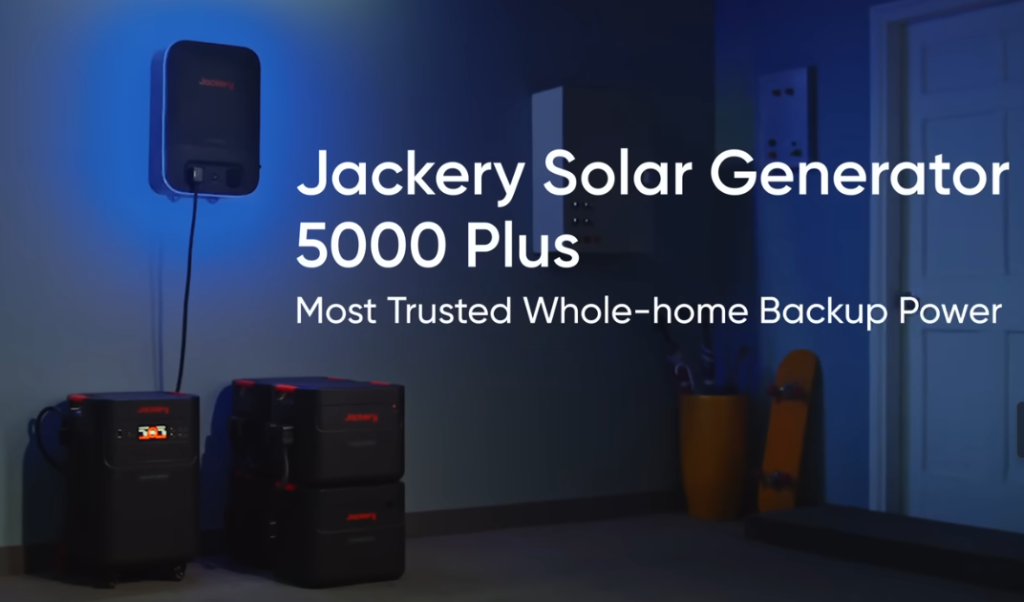
I saved Jackery’s whole-home backup power system for last because it has the unique option of adding on up to 60 kWh of storage capacity! Hopefully by now you know that’s a ridiculous amount of storage compared to most home energy systems. It’s not cheap, but it’s modular, so you could get some fraction of that. The system starts at $5k for 5kWh and adds about $2k for every incremental 5kWh, so it gets expensive fast. It’s like having a smallish EV battery powering your home (which, again, that is the future, so if you’re planning ahead, look for technologies that will allow reversible charging in your EV and a home energy system that will let you plug a car into it). Now the 60kWh Jackery system is like a really expensive daisy-chained battery depot from a M*A*S*H episode, so I’m not so sure that’s the ideal way to go, but it’s fascinating to me that the options are proliferating.
Companies are figuring out that people want backup power, and it’s because the climate is a disaster, getting worse, and with the fascists in charge of America, it’s just going to accelerate from here. Now is the time to get more personal energy security if you can.
I realize that not everyone can afford these things, even the smaller options—I do recommend that everyone have at least a power brick that’s kept charged up so you can have emergency power for your phone. And make a plan: talk to friends/family before outages happen, know what your resources are, maybe pool them so that everyone in your apartment hallway goes in on a Jackery you can share for phone charging. Resilience comes from community, not just personal ruggedization, so I hope this prompts you to consider broader options and how you can access them.
If You Have An EV
As I mentioned, my Hyundai Ioniq 6 has V2L (vehicle to load) so I can basically plug anything into the charge port (with a handy adapter) and get power from my car. I could run an extension cord to the refrig or anything else in a pinch, but I don’t have a good/easy way to plug it into my home battery. The GM Home Battery System has that capability now, but soon, all EVs and home backup batteries will work together. That capability is coming. I’ve seen it coming for years and it’s starting to happen. So if you’re planning ahead, either for an EV or a home backup battery, keep in mind that you’ll want to connect the two, so you want to look for those technology options as they arrive.
In the meantime, something smaller might be just the thing to carry you over. That’s exactly what I did with my littlest Jackery, using that for outages in my previous house, knowing that when I moved, I would get solar+home battery in the new house. Planning ahead like this pays off if you keep in mind that technology will keep evolving. And remember that the climate will keep getting worse.
Insulate, Get LEDs, Be Aware of Your Energy Usage
One of the best parts of thinking through these backup options is that you become aware of your energy usage, maybe find ways to conserve energy, and hopefully start making real plans for what you’d do in an outage. You can reduce how much energy it takes to just live your life by getting low-power LED light bulbs (this seriously makes a big difference), insulating your home, getting blinds to block heat or keep out the cold (blinds are better energy managers than drapes), and get an energy-conserving heat pump to reduce your energy bills (especially in the summer, but maybe keep that gas furnace as a backup—you can easily install a heat pump right over the furnace, which is what I did). Even getting a portable induction hot plate can be a great way to still be able to cook in an outage, if you’ve got a backup battery that’s sized for that.
I hope this will help you get started thinking about your backup energy options. I can’t cover everything in a post like this, and there are tons of products and options out there. If you’ve got a question, feel free to pop it in the comments and I’ll do my best to answer or point you in the right direction.
Peace and Love,
Sue
I think the most important part of this is deciding for yourself what you would actually need to power in an emergency! Deciding what’s truly essential is really valuable. Thank you for all these options! And here’s hoping one day I can get an EV and backup home battery (though where I’d put that in a condo is unclear, haha).
I’m so glad it helped! Definitely the most powerful thing is really thinking stuff through and being realistic about your situation (because everyone is different). It’s hard to visualize sometimes when you haven’t actually lived through an outage, much less a worse catastrophe. I’m hoping that if folks start thinking about power, they’ll start thinking about all the other things they depend on and make plans — or often just connections for resiliency in an emergency (phone a friend!).
Re: home backup batteries in a condo, yeah, that’s kind of a different situation, plus everyone’s condo is different. Home backup batteries are bulky and wall-mounted (Tesla/GM) or take up floor space (Jackery) and really belong in a garage of a stand-alone house. My son (26yo) has a condo and shares heating & electricity with his fellow building-mates — not really a way to back that up. But he does have a standalone/window AC unit he got last summer during the heat wave and *that* he could definitely power with one of the jackeries.